
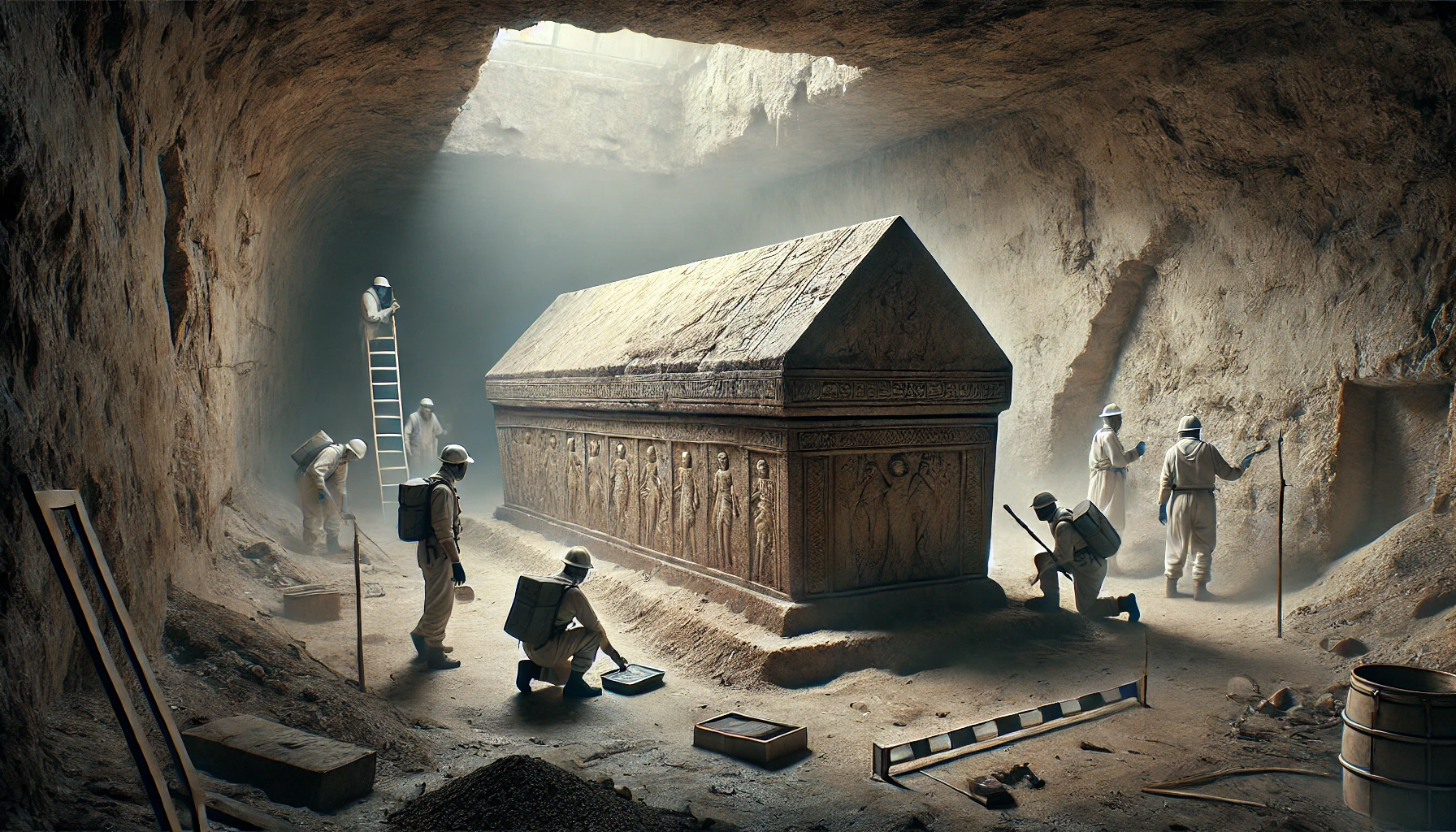
Archaeologists believe they have discovered the sarcophagus of Saint Nicholas, the figure who inspired the modern-day Santa Claus, during an excavation project in Turkey. The findings were made beneath the remains of a historic church, which had been built over an earlier religious site where the saint was reportedly buried.
The discovery occurred in the southern Turkish province of Antalya, a region widely regarded as Saint Nicholas’ birthplace. Researchers uncovered a marble sarcophagus and several surrounding artifacts while exploring the floor of the ancient church. Initial assessments indicate the burial site dates back to the 4th century, aligning with historical accounts of the saint’s life and death.
Saint Nicholas, a Christian bishop known for his generosity and protection of children, lived during the Roman era and became a widely celebrated figure, ultimately evolving into the legendary Santa Claus. According to historical records, he was buried in the church after his death, but his remains were thought to have been relocated centuries later to Italy.
However, the recent discovery suggests his original tomb may have remained hidden beneath layers of newer structures, preserved over time. Experts involved in the excavation project are optimistic that further analysis will confirm whether the sarcophagus holds Saint Nicholas’ remains.
The site is now undergoing additional study, including imaging and restoration efforts, as archaeologists carefully document the findings. If validated, the discovery could hold significant religious and historical importance, offering new insight into the life and legacy of one of the world’s most iconic figures.
Local officials and historians have expressed excitement over the find, anticipating it will attract worldwide interest and potentially boost tourism to the region. Researchers emphasize that while initial results are promising, ongoing examinations are necessary to confirm the sarcophagus’ connection to Saint Nicholas.