
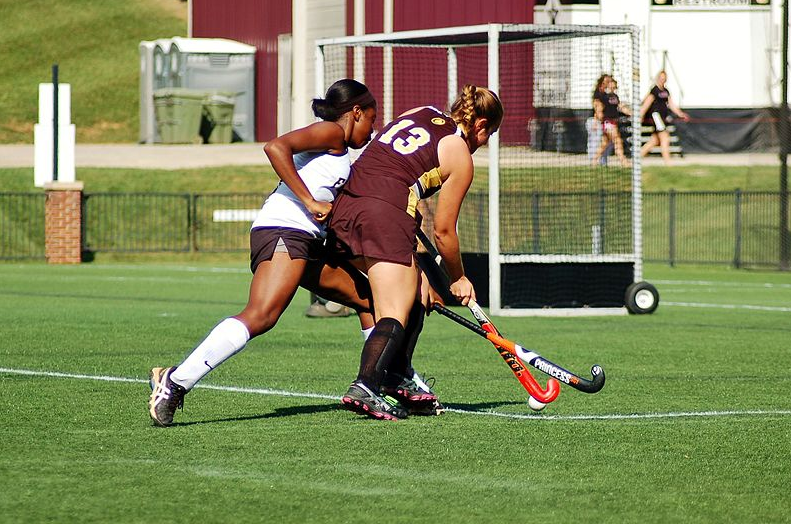
A contentious field hockey incident has sparked discussion about the need for gender parity in high school athletics.
Recent events in a high school playoff field hockey game in Massachusetts have sparked a discussion on the importance of gender parity in high school athletics. A female athlete from Dighton-Rehoboth Regional High School was playing field hockey when she was unintentionally hit in the face by a field hockey ball from a male athlete from Swampscott High School. The female player suffered serious facial injuries and lost two teeth. Regulations have been called into question as a result of this incident.
Video from the decisive playoff game between Dighton-Rehoboth and Swampscott captured the action in all its dramatic glory. When the male player lined up his shot on goal, the female defender was smacked in the face by the ball, stunning everyone on the pitch. The staff at Dighton-Rehoboth acted quickly to help the hurt athlete.
Superintendent Bill Runey of Dighton-Rehoboth High School wrote a letter expressing his sincere concern for the female field hockey player who was struck in the face and suffered serious facial and dental injuries during the third quarter of their MIAA state playoff game versus Swampscott. Runey prayed for the team, their families, and their coaches while they sought medical assistance for their injured player.
The female athlete lost at least two teeth, and while the entire extent of her injuries is unknown, they are serious enough to warrant concern. The male player responsible for the shot was a member of the Swampscott girls’ field hockey team.
As a result of this incident, the legitimacy of the regulations put in place by the Massachusetts Interscholastic Athletic Association (MIAA) in the 1970s has come into question. In spite of the fact that MIAA policy does not allow schools to exclude students on the basis of gender from extracurricular activities, schools are free to do so if they do not provide equal chances for male and female students. When there is just one team for a given sport, however, Title IX requires schools to provide equal access to athletics for students of both sexes. Superintendent Runey has stressed the importance of finding a balance between player safety and equity in light of this occurrence and the greater issue of male involvement in female sports.
In the context of coed events, Superintendent Runey acknowledged the present MIAA regulations but urged a revision to promote the health and safety of all competitors. He stressed the psychological and physical toll this occurrence took on the players and coaches, and the importance of taking extra measures to safeguard them.
Kelly Wolff, the athletic director of Swampscott Public Schools, has come out in defense of the male student who took the shot, saying that he has every right to do so because he has been a member of the varsity squad for four years and is a co-captain.
In reaction to the incident, the MIAA published a statement emphasizing their commitment to fostering a culture where all athletes may feel secure and supported. They cited Massachusetts’s 1979 Equal Rights Amendment as the legal basis for their ban on discrimination based on gender in interscholastic sports.
The MIAA acknowledged that parents and coaches have valid concerns about students participating in coed sports, but they also pointed out that the lack of sufficient data from injury rates has prevented the “student safety” argument from being used to change the rule. There have been and continue to be discussions about revising high school sports regulations to improve safety and equity in the wake of this tragic event.