
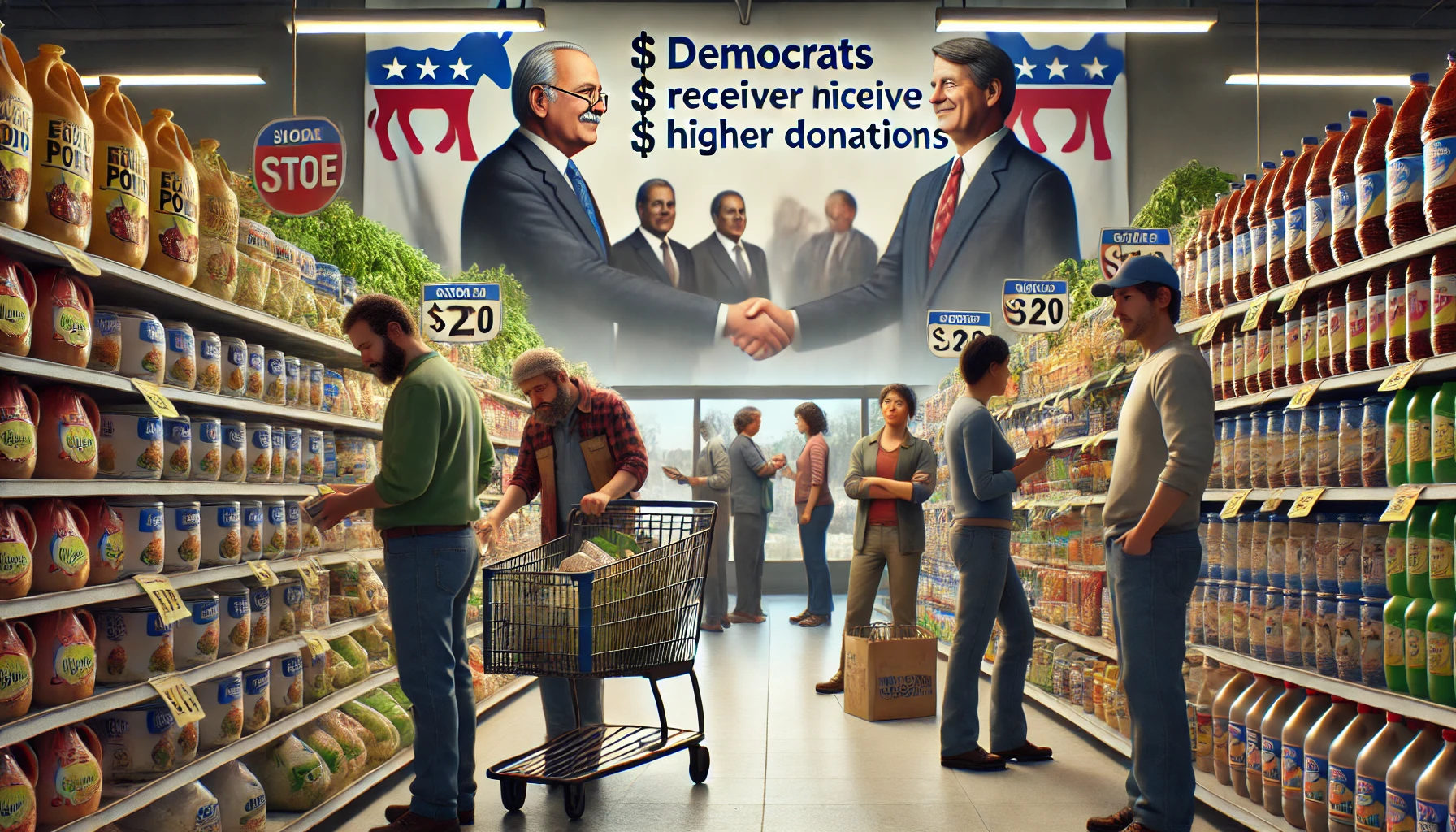
Grocery store chains across the United States have significantly increased their financial contributions to Congressional Democrats, a move that comes as lawmakers debate regulations that could impact the industry. The surge in donations is seen as an effort by the grocery sector to strengthen its influence in shaping policies that may affect everything from pricing to labor practices.
Recent campaign finance reports reveal that several major grocery retailers have ramped up their political donations to Democratic lawmakers, marking a noticeable shift in their traditional donation patterns. While the industry has typically maintained a balanced approach in its contributions to both parties, the latest figures suggest a strategic pivot toward the Democratic side of the aisle.
The timing of these increased donations coincides with ongoing discussions in Congress about antitrust regulations, wage laws, and environmental policies—issues that could have far-reaching consequences for the grocery sector. With Democratic lawmakers holding key positions on committees that oversee these areas, the industry appears eager to ensure its voice is heard.
“This uptick in donations is about securing a seat at the table,” said one industry analyst. “Grocery stores are navigating a rapidly changing landscape, and they want to make sure their concerns are considered as new policies are crafted.”
Among the issues of particular interest to grocery retailers are potential changes to antitrust laws that could impact mergers and acquisitions, as well as proposed increases in the federal minimum wage that could affect labor costs. Additionally, the push for more stringent environmental regulations has prompted concerns within the industry about the potential impact on supply chains and operational expenses.
In response to the increased donations, some critics have raised concerns about the influence of corporate money in politics. Advocacy groups argue that the influx of contributions from grocery chains could lead to policies that favor large corporations at the expense of consumers and small businesses.
“These donations raise questions about who really has the ear of our elected officials,” one watchdog group representative said. “We need to ensure that policy decisions are made in the public interest, not just to satisfy the demands of powerful industries.”
Despite the criticism, Democratic lawmakers have defended their engagement with the grocery industry, emphasizing the importance of dialogue with all stakeholders. They argue that understanding the challenges faced by grocery retailers is crucial to crafting effective legislation that supports both businesses and consumers.
As the 2024 election cycle heats up, the relationship between grocery store chains and Congressional Democrats is likely to remain under the spotlight. With significant policy debates on the horizon, the industry’s efforts to influence the legislative process underscore the high stakes involved in shaping the future of the grocery business in America.