
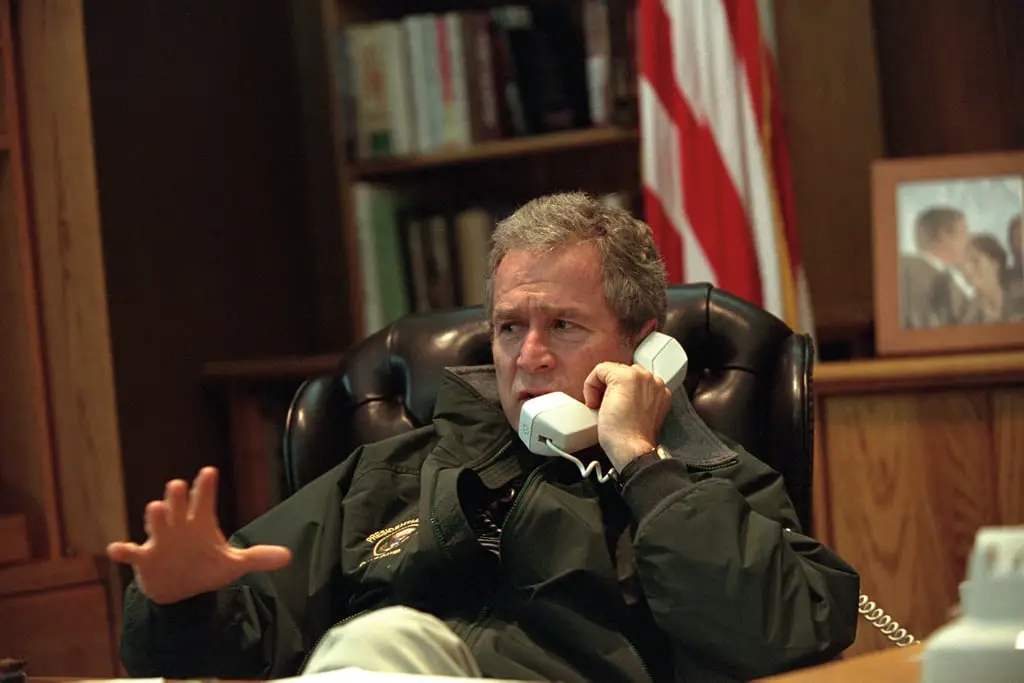
Former President George W. Bush has announced that he will not endorse either Vice President Kamala Harris or former President Donald Trump in the 2024 presidential election. This decision follows the recent endorsement of Harris by Dick Cheney, Bush’s former Vice President, and his daughter, Liz Cheney, who have both criticized Trump and aligned themselves against his potential return to the White House.
Bush, a Republican who has often kept a low profile in recent years, stated that he does not intend to publicly back any candidate in the upcoming election. His refusal to endorse Harris or Trump underscores his reluctance to enter the fray of the current political battles and reflects the complicated dynamics within the Republican Party, especially in the wake of Trump’s continued influence.
According to sources close to Bush, his decision is rooted in a desire to remain neutral and avoid further polarizing the already divided political landscape. While Bush has not explicitly criticized Trump, he has in the past expressed concerns about the direction of the Republican Party and has called for a return to civility and bipartisanship in American politics.
Bush’s decision not to endorse comes after the Cheneys’ public support for Harris, which has sparked significant discussion and controversy within Republican circles. Their endorsement was framed as a move to preserve democratic norms and counter what they perceive as the risks posed by a potential Trump presidency.
The former president’s choice to stay out of the endorsement game reflects a broader trend among some establishment Republicans who are navigating a delicate balance between opposing Trump and avoiding outright support for Democratic candidates. As the 2024 election season unfolds, Bush’s stance may influence other moderates within the GOP who are also weighing their options in a highly charged political environment.