
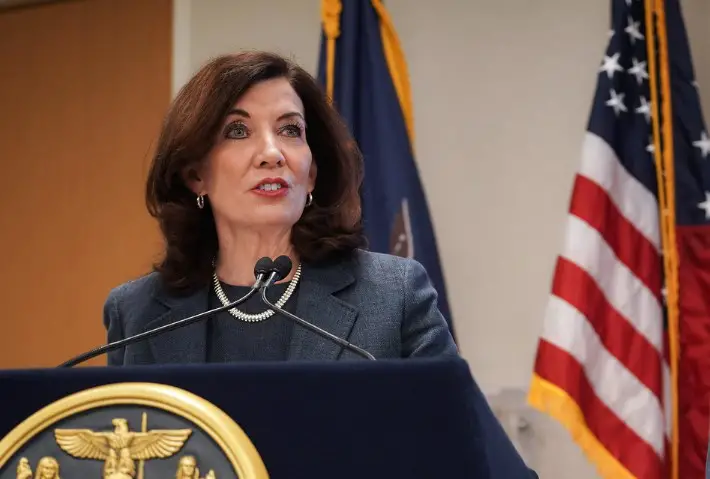
New York Governor Kathy Hochul is reportedly preparing to revive the contentious congestion pricing plan for New York City, according to sources. The initiative, which has been at the center of debate for years, would impose tolls on vehicles entering certain areas of Manhattan in an effort to reduce traffic congestion and generate revenue for public transit improvements.
The relaunch of the plan, which had faced delays and pushback from various groups, is expected to target high-traffic zones, potentially affecting commuters, businesses, and residents in and around the city. Proponents argue that congestion pricing is necessary to ease traffic gridlock, curb pollution, and fund much-needed upgrades to the city’s aging transit infrastructure. Supporters also emphasize the potential benefits for public health and air quality by reducing vehicle emissions in densely populated areas.
Critics, however, have voiced concerns about the economic impact of the plan, particularly on lower-income drivers, small businesses, and commuters from the outer boroughs and suburbs. Some have labeled it a financial burden that disproportionately affects certain groups. There have also been calls for greater transparency and clarity on how the revenue from the tolls would be used.
The details of the updated proposal and its implementation timeline have not yet been disclosed. As discussions continue, the plan’s potential effects on daily life for millions of New Yorkers remain a focal point of both support and opposition, reflecting the complex balance of environmental goals, economic realities, and city planning. Governor Hochul’s move is expected to reignite public debate over congestion pricing’s role in shaping the future of New York City’s streets and transportation network.