
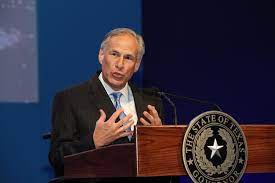
In a recent declaration of support for Texas Governor Greg Abbott, South Dakota Governor Kristi Noem vowed to provide razor wire for border security if President Biden or federal authorities intervene against Abbott’s border control measures. This pledge follows a Supreme Court decision allowing U.S. Border Patrol agents to remove concertina wire installed by Texas near Eagle Pass.
Noem, speaking on “America Reports,” stated, “I’ll drive in more razor wire from South Dakota if I have to, for [Abbott] to do his job.” She underscored the role of governors as commanders-in-chief of their National Guards, emphasizing the weight of this responsibility. Her support for Abbott’s stance on border security reflects a shared view among several Republican governors.
The conflict arose after a Supreme Court ruling in which two conservative justices sided with liberals, vacating a lower court order and enabling Border Patrol agents to cut the concertina wire installed by Texas. Abbott, defying the order, cited a constitutional duty of the federal executive branch to enforce laws protecting states against a “lawless president.”
Governors Ron DeSantis of Florida and Kevin Stitt of Oklahoma have also indicated their solidarity with Abbott. Noem, though far from the southern border, described the situation as a “war zone” and criticized Biden’s handling of the border crisis, claiming his policies are transforming the U.S. into Europe.
Texas Democrats, including Reps. Greg Casar and Joaquin Castro, have urged Biden to federalize Texas’s National Guard troops, currently under Abbott’s control. This proposal mirrors a historical precedent set by President Dwight Eisenhower in 1957 when he federalized the Arkansas National Guard during the Little Rock Central High School desegregation crisis.
Sen. Ted Cruz of Texas has criticized Biden’s border policies, accusing him of deliberately breaking border security and viewing migrants as potential lifelong Democratic voters, despite the crisis’s escalating human toll.
This ongoing dispute underscores the tensions between state and federal governments over border security and immigration policy, highlighting the complexities of a situation affecting not only border states but the entire nation.