
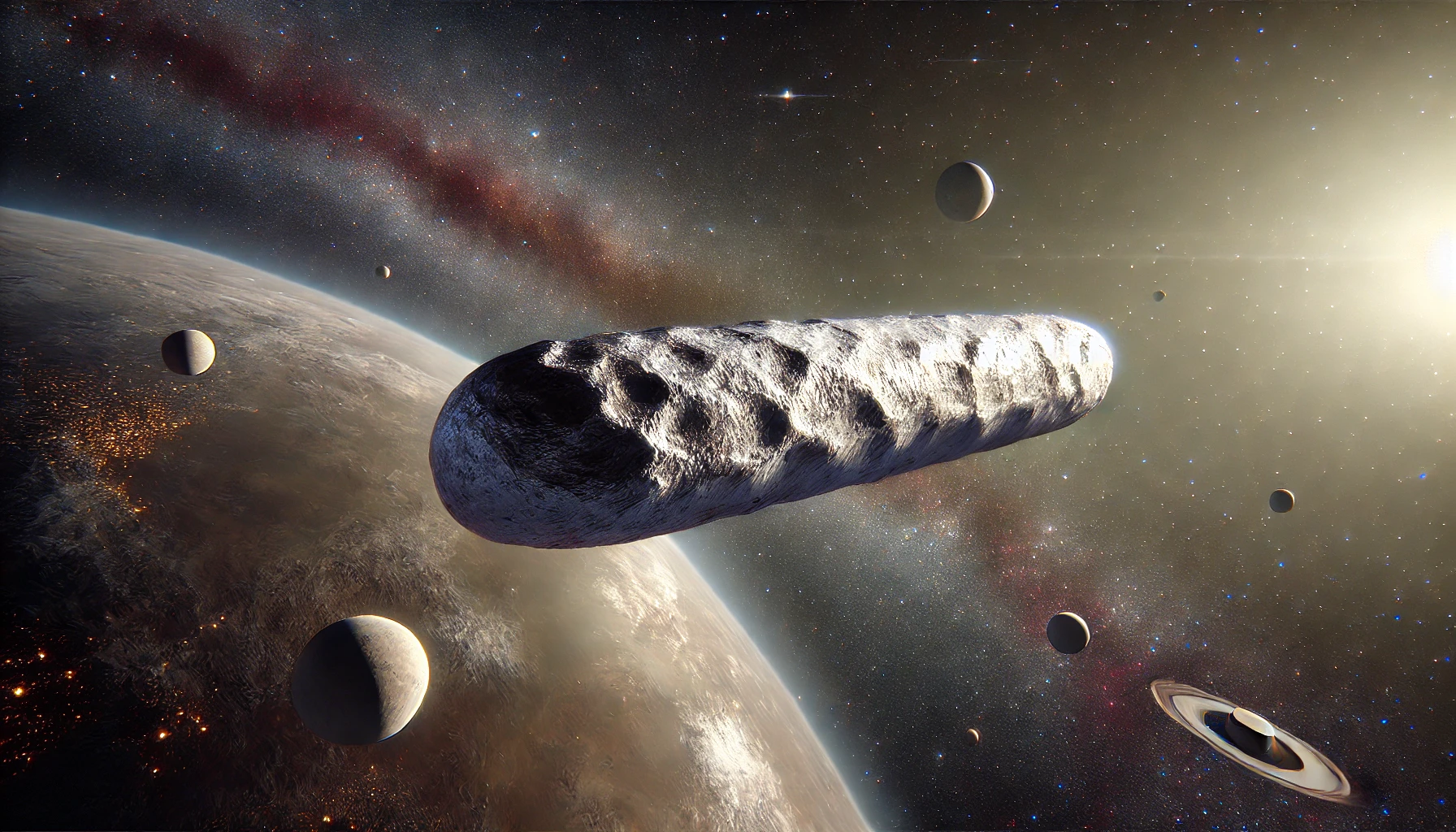
A striking new proposal by Harvard astrophysicist Avi Loeb and his co-authors suggests that the interstellar object known as 3I/ATLAS, recently detected speeding through our solar system, might not be a natural comet—but potentially a hostile alien spacecraft.
Loeb and his team frame the notion as a “pedagogical exercise”, inviting the scientific community to explore all possibilities—even those that challenge conventional assumptions. They point to several unusual characteristics of 3I/ATLAS: its extreme velocity, atypical trajectory, and its planned close passages past Venus, Mars, and Jupiter. Additionally, the object’s perihelion—its nearest approach to the Sun—will position it hidden from Earth’s view for a time, prompting speculation about possible covert observations.
Despite the dramatic hypothesis, the majority of scientists remain unconvinced. Researchers from institutions like the University of Regina and Michigan State University emphasize that 3I/ATLAS displays hallmarks of a standard interstellar comet, and they stress the importance of awaiting more data—particularly evidence of volatile materials in its tail—before veering into speculative territory. NASA also confirmed the object poses no threat to Earth and is expected to pass us at a safe distance.
This debate marks a rare intersection of theoretical possibility and empirical discipline. As 3I/ATLAS barrels ever closer to the inner solar system, ongoing observations will provide crucial insights into whether we’re witnessing cosmic coincidence—or something far more extraordinary.