
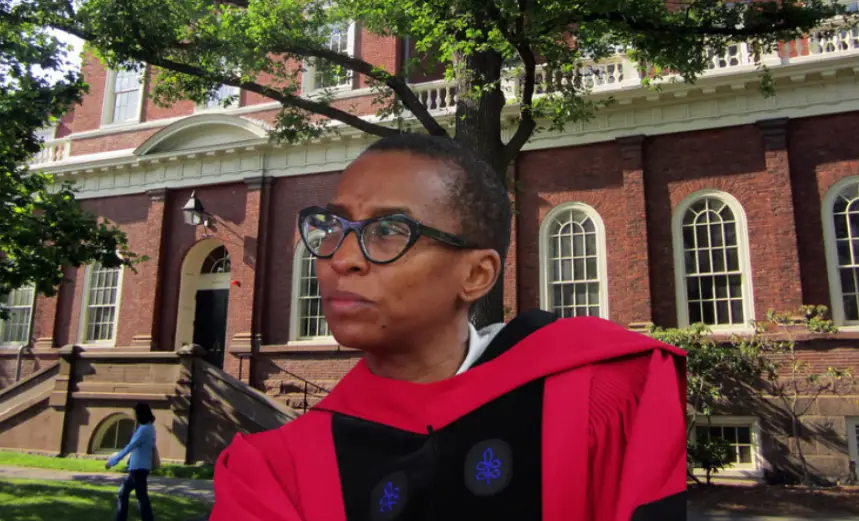
Harvard University’s President, Claudine Gay, is facing a fresh wave of plagiarism accusations as over forty new allegations have surfaced, casting a renewed shadow over her tenure. The Washington Free Beacon disclosed that an extensive complaint was lodged with Harvard’s research integrity officer, spotlighting an alleged pattern of academic misconduct more pervasive than previously acknowledged.
The allegations, according to the Free Beacon, were independently substantiated, including the authenticity of the accuser—a professor at a separate institution who opted for anonymity due to fear of reprisal. This development puts the university’s governing body, the Harvard Corporation, which had previously expressed confidence in Gay’s leadership after an ‘independent review,’ under renewed scrutiny.
Earlier allegations reported by the Free Beacon suggested Gay paraphrased or directly quoted nearly twenty authors without adequate citation in several academic papers, including her doctoral thesis. The new allegations propose even more instances where Gay’s work lacked proper attribution, affecting nearly half of her published scholarly output.
The complaint submitted to Harvard’s research integrity office highlighted that the speed of the university’s previous review casts doubt on whether all evidence had been thoroughly considered. Harvard University has yet to publicly comment on these latest developments.
This case raises pressing questions about the accountability measures applied to faculty versus students, as Harvard’s historical approach to faculty implicated in academic dishonesty often resulted in minimal repercussions or complete dismissal of charges. The ongoing situation at Harvard continues to be a focal point for discussions on academic integrity and institutional responses to misconduct within the realm of higher education.