
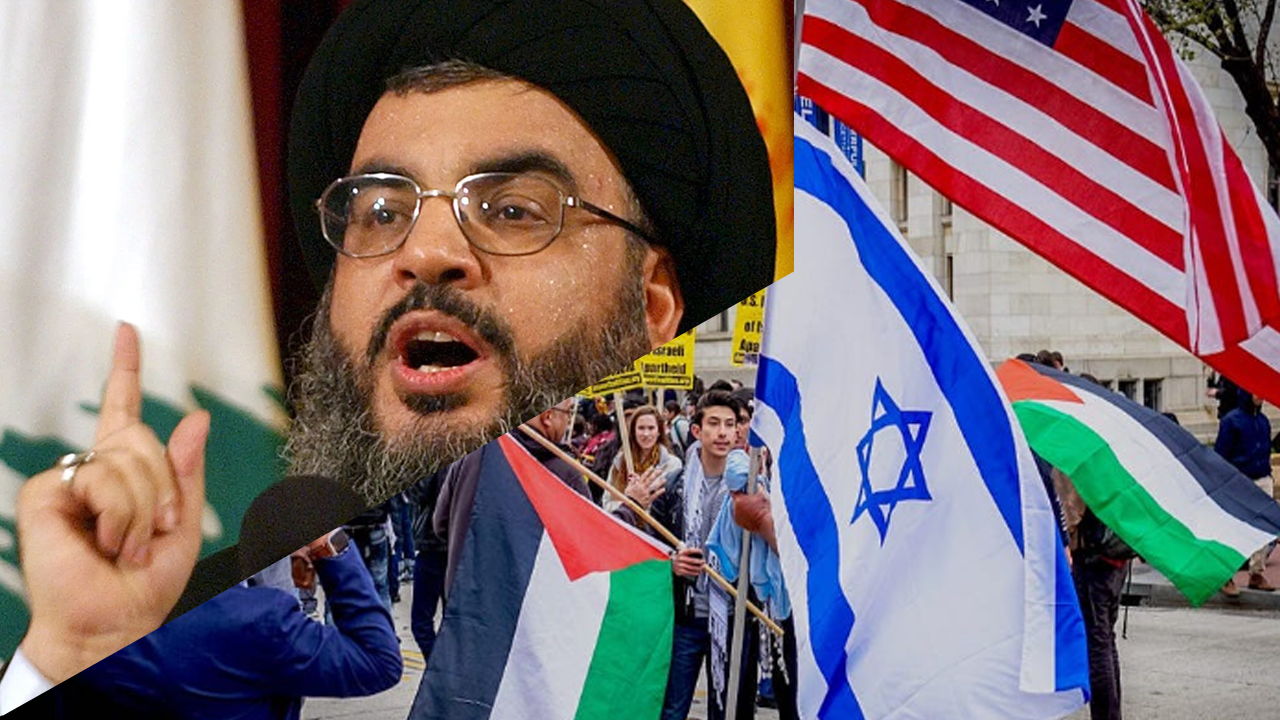
In a recent broadcast, the chief of Hezbollah, Sayyed Hassan Nasrallah, delivered a charged message that hinted at the possibility of heightened actions by his organization in the ongoing conflict between Israel and Hamas. Nasrallah stopped short of pledging Hezbollah’s full engagement alongside Hamas in Gaza but indicated that his group was contributing strategically by diverting Israeli forces to Lebanon’s border.
In what is viewed as his most significant address since the confrontation initiated by Hamas on October 7th, Nasrallah outlined a strategy of patience and cautioned that expansive regional conflict was not yet advisable. He articulated a veiled threat of escalation based on future developments, particularly in response to Israeli maneuvers in Gaza.
Amidst these assertions, Nasrallah leveled a stark admonition towards Israel regarding any preemptive strikes on Lebanese soil, suggesting severe repercussions for such actions. His rhetoric extended towards the United States, which he accused of orchestrating the Gaza conflict, stating that it should brace for consequences due to its support of Israel.
Throughout his hour-and-a-half-long statement, Nasrallah distanced Hezbollah from the initial onslaught against Israel, underscoring it as a purely Palestinian initiative. However, he underscored Hezbollah’s alignment with Hamas’s cause, framing it as a ‘holy war’ and positioning his organization as a supporter of Hamas’s objectives in Gaza.
Nasrallah’s comments have been met with varied interpretations across the Middle East, with some analysts perceiving his tone as unexpectedly measured, suggesting an intent to avoid a full-scale escalation. Experts in international relations are scrutinizing these developments, assessing the potential for the conflict to widen and the ramifications of Hezbollah’s involvement.
The speech by Nasrallah was particularly notable for its timing and content, suggesting a calculated approach to regional dynamics and a clear statement of intent regarding Hezbollah’s position on the Israel-Hamas conflict.