
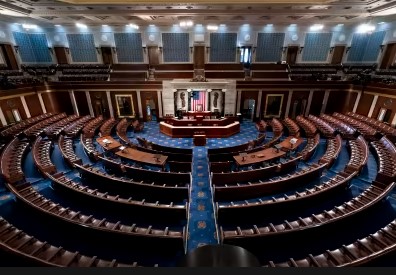
On Thursday, the House of Representatives voted to terminate a Defense Department policy that reimburses servicemembers for out-of-state travel to obtain abortions. The yearly defense policy measure was amended by Texas Republican Ronny Jackson, and it was approved by a vote of 221-213. In light of the Supreme Court’s decision in Roe v. Wade, the amendment would require the Pentagon to cease the policy.
The House decision was celebrated by conservatives who said the inclusion of these words in the NDAA was key to winning their vote. Many Democrats are likely to vote against the measure because of this provision.
The ruling may make it difficult for Kevin McCarthy, a Republican from California and the speaker of the House, to push through the NDAA. Because of his small House majority, he cannot afford to lose more than four votes on any bill that requires Democratic cooperation. It’s also unclear whether the more conservative members of his party will get what they want in order to support the final law.
During the debate leading up to the vote, New Jersey Democrat Rep. Mikie Sherrill argued that the amendment would put servicewomen and their families in danger by restricting their ability to travel for medical care that might not be available at their current duty station.
Rep. Jackson argued in favor of the amendment by saying that the Biden administration’s approach is illegal. He said that the government was seeking to circumvent the Supreme Court’s ruling in Dobbs v. Jackson Women’s Health Organization by enacting laws that would increase access to abortion while simultaneously demanding government funding. Jackson made a case against using tax dollars to pay for abortions by using the Hyde Amendment.
The voting on the amendment was one of 12 changes to the NDAA that were supported mostly by Republicans. Georgia Representative Marjorie Taylor Greene and Florida Representative Matt Gaetz sought amendments to restrict U.S. aid to Ukraine, but they were met with resistance from both Democrats and some Republicans. However, a 222-211 vote supported an amendment by Montana Republican Rep. Matt Rosendale that would have prevented military healthcare coverage for gender transition procedures and hormone therapy.
Two amendments sponsored by Texas Republican Rep. Chip Roy to limit military efforts to promote diversity, equity, and inclusion were also passed. Both amendments seek to prevent the Defense Department’s educational arm from promoting teachings that label the United States and its founding documents as racist. The first amendment would prevent the use of federal funds to establish diversity officer and advisor positions within the Pentagon.