
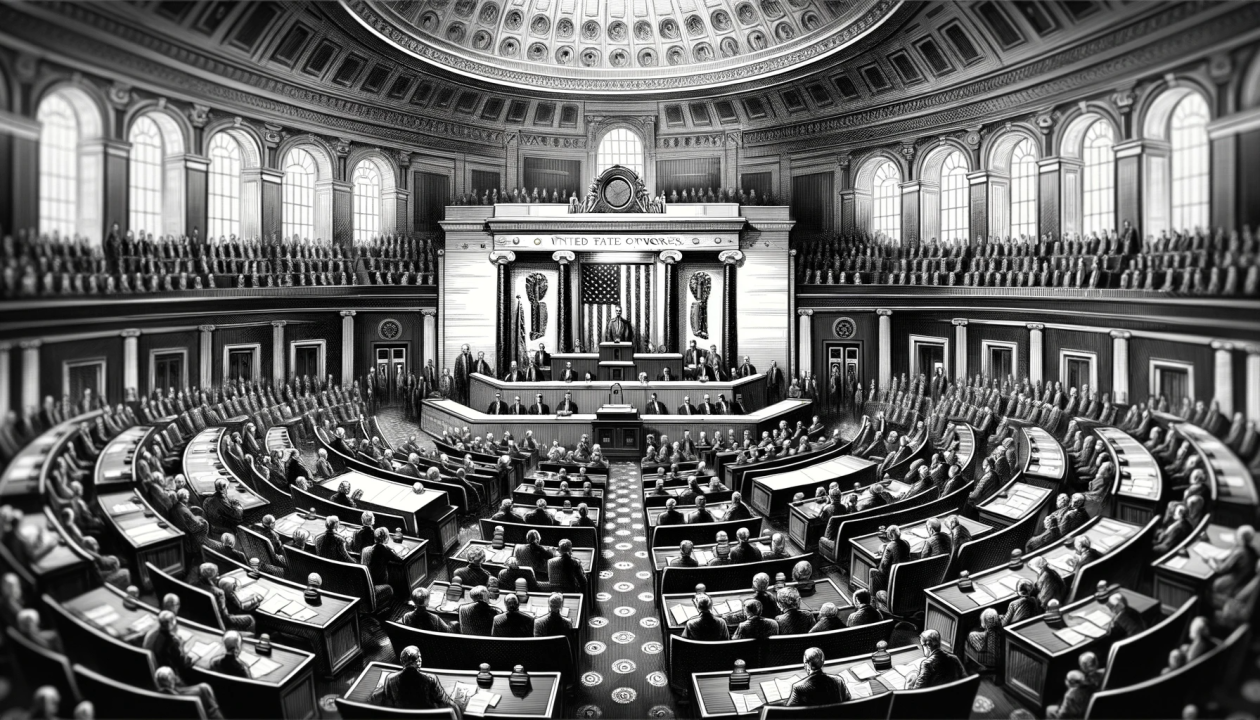
Legislators are preparing for a frenetic start to 2024 as the U.S. House of Representatives concludes its activities for the year, having postponed a number of critical legislative matters until the new year. In its additional week of session, the Senate is deliberating on foreign aid agreements and border policy, topics that the House is scheduled to revisit.
The House effectively completed the National Defense Authorization Act (NDAA), a critical yearly measure that delineates Pentagon policies for the forthcoming fiscal year, prior to adjourning for the holiday recess. A contentious provision of the NDAA, Section 702 of the Foreign Intelligence Surveillance Act (FISA), which allows the intelligence community to surveil foreign nationals communicating with American citizens outside the United States without a warrant, is temporarily extended in this year’s NDAA.
The adjournment of FISA Section 702 until April has engendered a contentious discourse, as detractors from opposing political stances advocate for substantial limitations out of apprehensions regarding encroachments upon civil liberties. Conversely, proponents assert that it is an indispensable instrument in preventing terrorist endeavors.
The House is also confronted with the crucial matter of reauthorizing the Federal Aviation Administration (FAA), an action that has been temporarily postponed until March. This issue is anticipated to be discussed by the Senate during the upcoming week.
Congress will face one of its most pressing challenges in the coming year in resolving government funding. Continuing resolutions (CRs), which are temporary federal spending bills, mandate that legislators secure funding for certain agencies by January 19 and the remainder by February 2. As a result of the House having only completed five of the twelve single-subject appropriations measures it pledged to pass, this situation has arisen; the Senate, meanwhile, has passed three in a combined “minibus.”
As negotiations continue between the House and Senate, a definitive topline budget number remains to be agreed upon by both chambers. The complexity and urgency of the legislative tasks that Congress will encounter in the early months of 2024 are highlighted by this unresolved matter.
As the House adjourns for the year, these postponed conflicts loom large, indicating that the upcoming legislative session will likely be hectic and potentially contentious.