
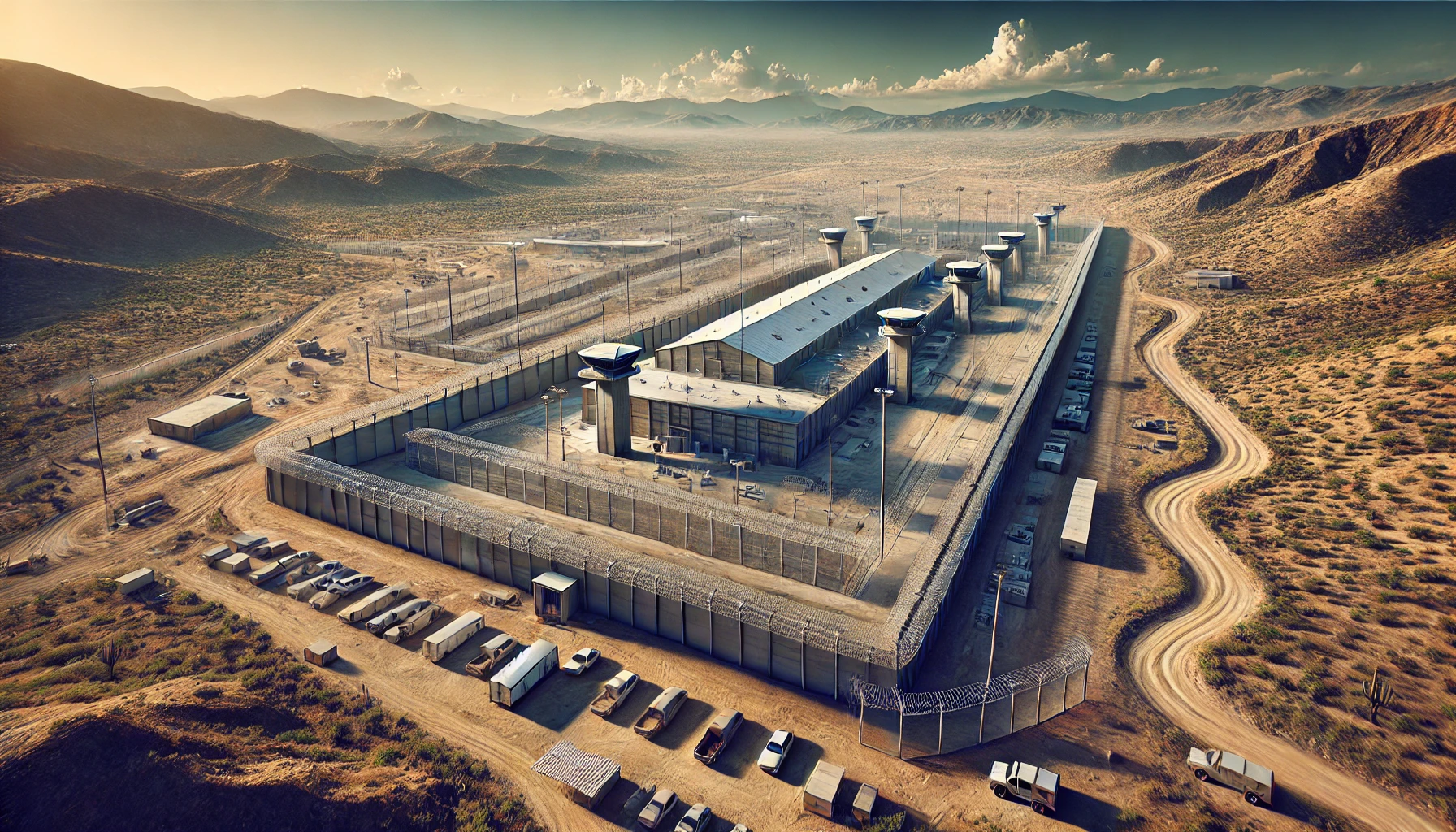
El Salvador operates one of the world’s largest prison facilities, a massive complex built to house up to 40,000 inmates as part of the government’s aggressive crackdown on gang violence. The prison, located in a remote rural area, was designed to detain large numbers of suspected gang members under some of the strictest security conditions in the region.
The facility is made up of multiple enormous cell blocks where prisoners are held in tightly controlled environments. Inmates are kept under near-constant confinement, with minimal movement outside their cells and little access to rehabilitation programs or educational activities. Contact with the outside world is heavily restricted, and family visits are largely prohibited.
Security inside the prison is intense, with armed guards, surveillance systems, and regimented routines governing daily life. Cells hold dozens of inmates at a time, reflecting the scale of arrests carried out during nationwide anti-gang operations that dramatically increased incarceration levels.
Government officials have defended the prison as a necessary tool to restore public safety and dismantle criminal organizations. Human rights advocates, however, have raised concerns about overcrowding, limited access to basic services, and the long-term impact of such harsh detention conditions.
The mega-prison has become a symbol of El Salvador’s uncompromising approach to crime control, drawing global attention as debates continue over security, civil liberties, and the future of incarceration policy.