
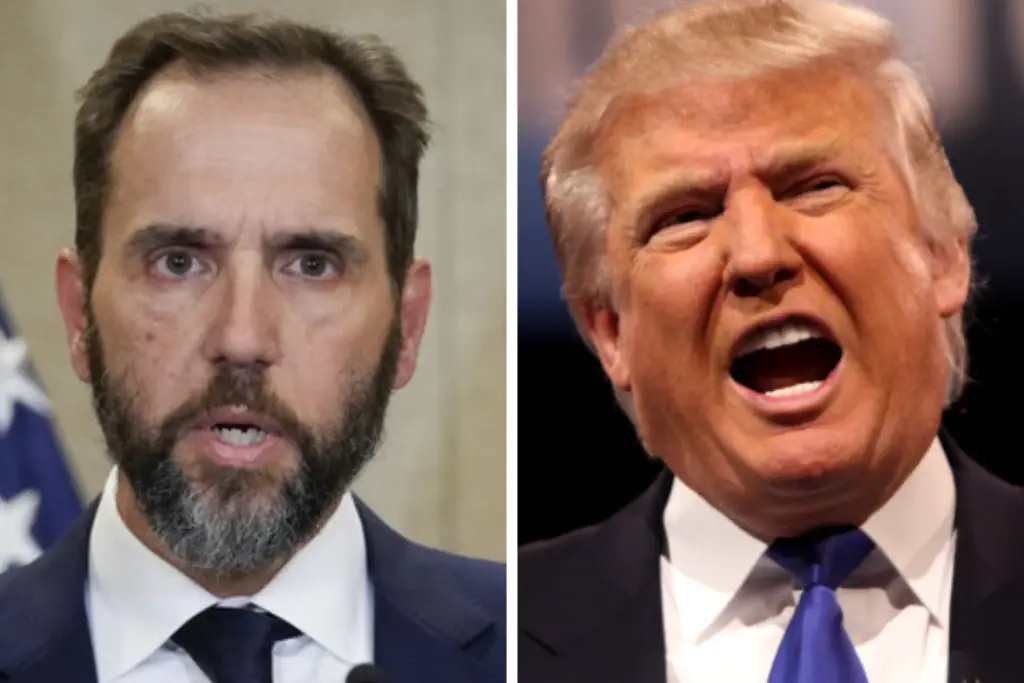
In a notable development in the legal battles surrounding former President Trump, Special Counsel Jack Smith of the U.S. Department of Justice has challenged Trump’s assertion of presidential immunity in relation to allegations of interference in the 2020 election. This challenge was formally presented in a document filed with the U.S. Court of Appeals for the District of Columbia on Saturday.
Smith’s filing is a direct response to Trump’s motions to dismiss the case on the grounds of presidential immunity and double jeopardy principles. In the document, Smith argues against the notion that a president, or former president, can claim immunity from criminal prosecution, especially in cases where the alleged criminal activity is aimed at undermining electoral processes. He posited that allowing such immunity could pose a significant threat to the presidency and the foundational elements of American democracy.
The filing further alleges that Trump engaged in a conspiracy to propagate false claims of election fraud, with the ultimate goal of overturning the legitimate results of the 2020 election and disenfranchising millions of voters. Smith emphasizes the critical need for a swift resolution of this case due to its significant public importance and requests that the Court issue its mandate within five days of entering judgment, to expedite any further reviews.
This submission to the Court of Appeals follows a recent decision by the U.S. Supreme Court. The Supreme Court declined to fast-track their review of Trump’s immunity claim, choosing instead to allow the federal appeals court to complete its assessment first. Trump’s legal team had advocated for this approach, emphasizing the monumental and historic nature of the questions at hand. They argued that the claim of presidential immunity deserves thorough review by lower courts before potentially advancing to the Supreme Court.
The brief from Trump’s team highlighted the critical nature of accurately addressing a claim of presidential immunity, arguing that any misjudgment in this regard warrants review by the nation’s highest court. However, they insisted that the appeal should first proceed through the established judicial channels, starting with the D.C. Court of Appeals, to ensure a comprehensive and prudent legal process.