
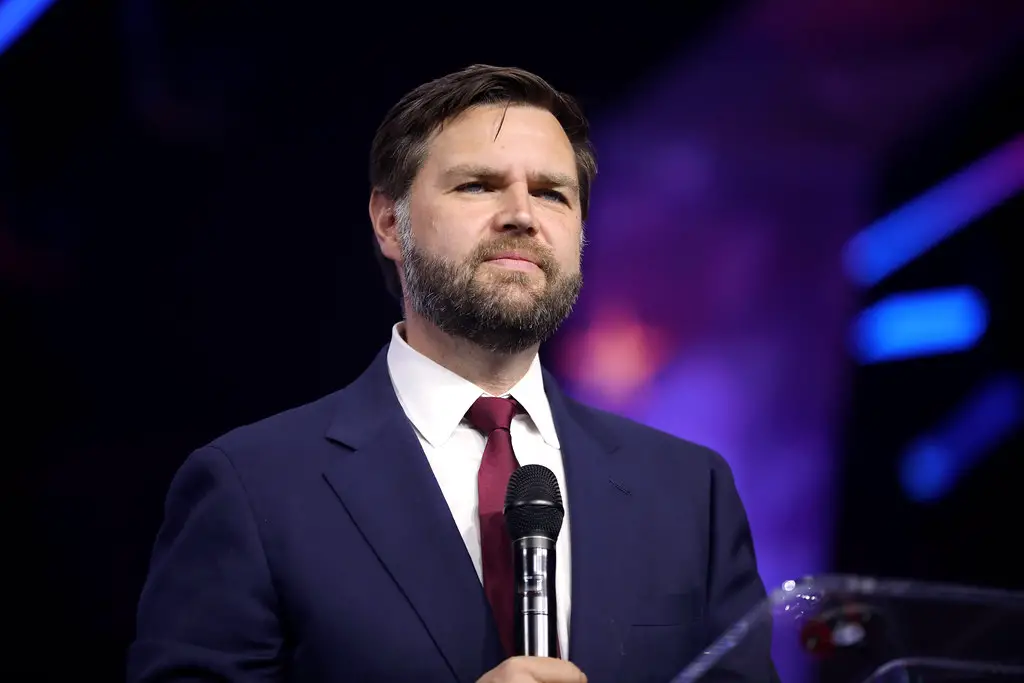
Senator J.D. Vance was met with boos and jeers during a speech at a firefighters union event when he challenged the audience to consider what benefits they have received from the Democratic Party. The heated exchange occurred at a gathering of the International Association of Fire Fighters (IAFF) in Cleveland, Ohio, where Vance addressed a room filled with union members and their families.
Vance, a Republican from Ohio, took the podium to discuss his vision for the future of labor and the role of unions in the modern economy. While his speech began on a cordial note, emphasizing his respect for the work firefighters do, it took a contentious turn when he questioned the effectiveness of Democratic policies for working-class Americans.
“What have the Democrats really done for you?” Vance asked, addressing the room. “Year after year, they promise support for the working man, but what results have we actually seen? Have your wages kept up with inflation? Have your benefits improved? Or are they just giving you empty promises while playing politics with your livelihoods?”
The question immediately drew a mixed reaction from the crowd. While a few in the audience nodded in agreement, a significant portion of the attendees began booing and shouting in disapproval. Some could be heard yelling back at the senator, accusing him of being out of touch with the challenges they face.
The firefighters’ union, which has historically leaned Democratic in its endorsements and policy positions, is known for its strong support of labor rights, collective bargaining, and worker protections—principles often championed by the Democratic Party. Vance’s remarks were perceived by many in the room as an attack on the union’s values and political alignment.
As the boos continued, Vance attempted to regain control of the situation, emphasizing that his comments were not meant to demean the firefighters or their union but to provoke thought about political accountability.
“I’m not here to disrespect anyone,” he continued, trying to calm the crowd. “I’m here to ask tough questions that we all need to think about. My goal is to see that hardworking Americans like you are genuinely supported by the people you elect, regardless of party.”
Despite his efforts, the atmosphere remained tense, and several attendees walked out in protest. Others stayed but continued to express their displeasure, with some even holding up signs advocating for better wages and conditions, reflecting their frustration with Vance’s line of questioning.
A representative from the IAFF later issued a statement, emphasizing the union’s commitment to its members and their rights. The statement read, “Our members are committed to supporting leaders who advocate for the well-being and safety of firefighters across this country. While we welcome robust discussions, we also stand firm in our support for those who have consistently fought for our rights and protections.”
Following the event, Vance addressed the media, standing by his remarks but acknowledging the strong reaction. “I knew this wouldn’t be an easy crowd,” he said. “But it’s important to ask these questions. The American worker deserves better, and we need to have these difficult conversations to find real solutions.”
Political analysts have noted that Vance’s appearance at the union event was a calculated move to appeal to working-class voters, a demographic that has been increasingly contested between Republicans and Democrats. However, the reception he received suggests that there remains a significant divide between his approach and the union’s established base.
Some political commentators have argued that while Vance’s attempt to engage with traditionally Democratic constituencies is notable, it may require a more nuanced approach that respects the longstanding relationships these groups have with their political allies.
The incident has sparked a broader discussion about the future of labor unions in American politics and the potential for cross-party support. As the political landscape continues to shift, both parties are likely to compete fiercely for the support of unions and their members, who remain a powerful force in shaping policy and elections.