
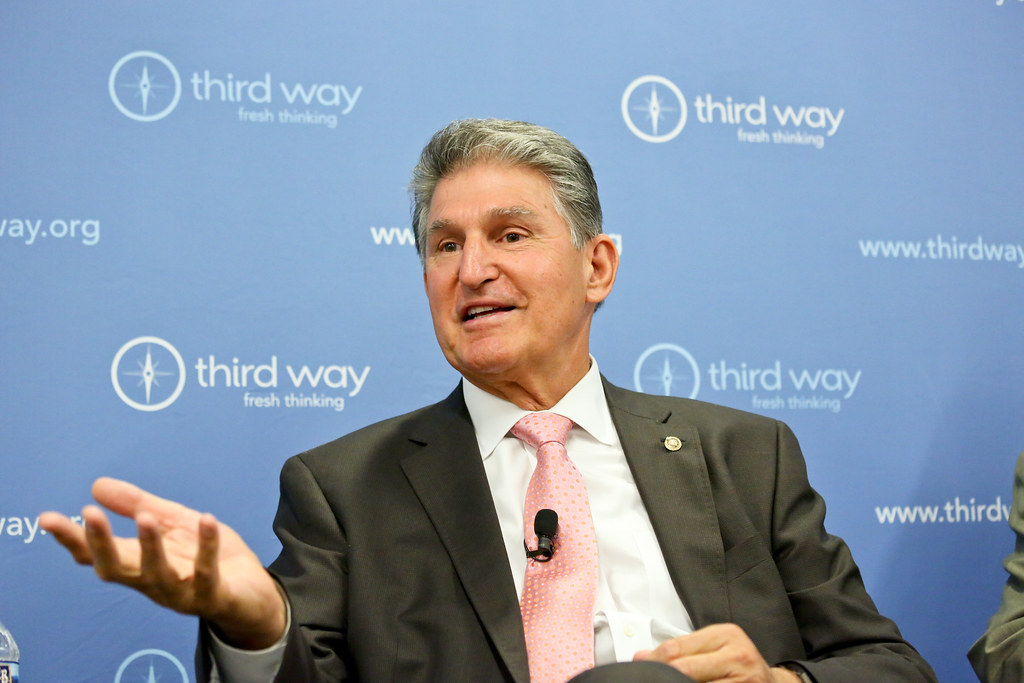
In a recent interview on Fox News’ “One Nation,” Senator Joe Manchin of West Virginia expressed his belief that former President Donald Trump could potentially secure a victory in the upcoming 2024 presidential election. As a Democrat from a predominantly red state, Manchin’s views often diverge from typical party lines, reflecting his constituency’s more moderate or conservative leanings.
During the interview, Manchin criticized the current trajectory of both major political parties in the United States, suggesting that the Republican Party needs to “make it grand again” and the Democratic Party needs to be “made responsible again.” His commentary points to his perception that both parties have strayed into extremism and have lost touch with the practical concerns of everyday Americans.
Manchin, who announced he would not seek re-election, spoke about the virtues of hard work and self-reliance, values he says are held dear by his constituents. “They believe in giving a helping hand, but they believe you ought to get off your butt and do something sometimes,” Manchin stated, emphasizing a need for personal accountability alongside governmental support.
The senator also shared his concerns about the nation’s direction with President Biden, particularly warning against an over-reliance on government aid which he fears could shift the national ethos away from the self-reliance championed by John F. Kennedy.
Additionally, Manchin addressed the response to the Israel-Hamas conflict, criticizing misinformation and the support for Hamas, which he views as detrimental to the foundational values of the United States. He recalled protests from the Vietnam era as being aimed at improving America, contrasting them with current movements that he perceives as trying to undermine the country’s fabric.
These statements highlight Manchin’s unique position within his party and underscore his ongoing efforts to bridge divides in American politics by advocating for a return to core American values of hard work, self-sufficiency, and principled foreign policy.