
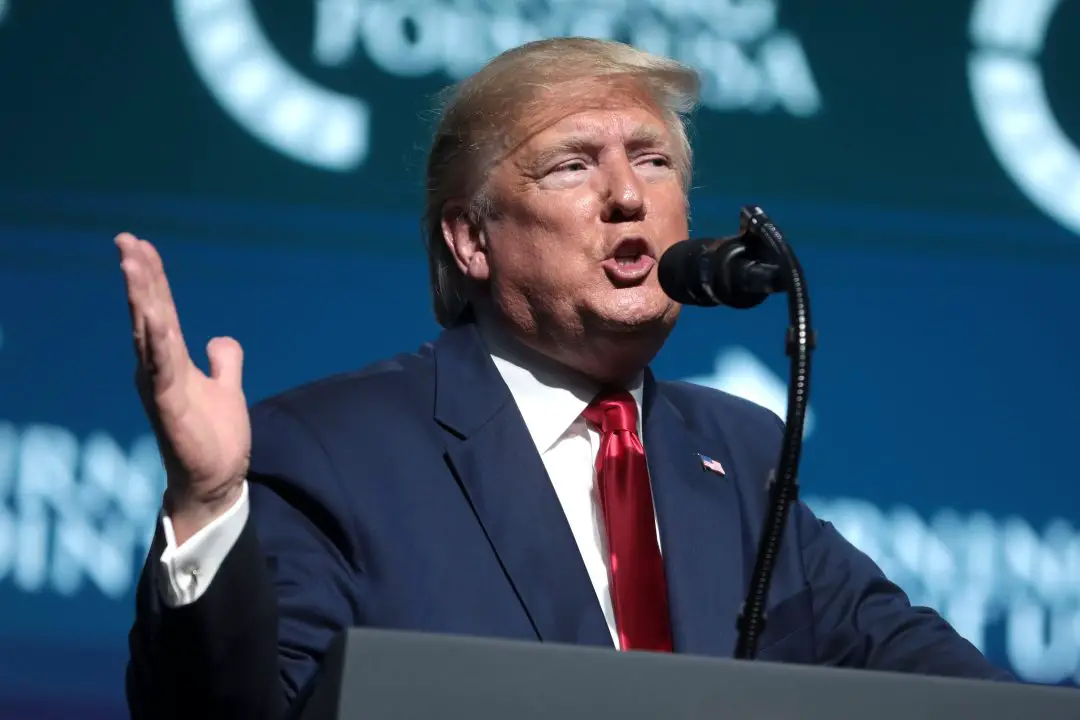
A federal judge in Washington, D.C., has halted the Trump administration’s plan to require voters to provide documentary proof of U.S. citizenship when registering with the national voter registration form, ruling that the executive order exceeded presidential authority and violated federal election law.
The decision, issued by Judge Colleen Kollar-Kotelly of the U.S. District Court, effectively prevents the Election Assistance Commission (EAC) from enforcing the new mandate nationwide. The order, signed earlier this year by President Donald Trump, sought to compel individuals to submit a passport, birth certificate, or naturalization record when registering through the federal form used in states that do not have their own proof-of-citizenship requirements.
In her ruling, Judge Kollar-Kotelly wrote that the executive branch “cannot unilaterally alter the statutory framework Congress enacted to regulate federal elections.” The court concluded that Trump’s directive would create unequal standards across states, undermine access to voter registration, and impose administrative burdens inconsistent with federal law.
The lawsuit challenging the order was filed by several voting-rights groups, including the League of Women Voters, the Democratic National Committee (DNC), and the League of United Latin American Citizens (LULAC). Plaintiffs argued that the rule would disenfranchise thousands of eligible voters—particularly naturalized citizens, students, and low-income individuals—by adding unnecessary barriers to registration.
The Trump administration defended the policy as a vital step to protect election integrity and prevent potential voter fraud. White House officials asserted that the order was designed to ensure only U.S. citizens participate in federal elections, claiming that current verification systems are inadequate. Following the ruling, the administration announced its intention to appeal, arguing that Congress gave the executive branch sufficient discretion to oversee election security under federal law.
Under the judge’s injunction, the EAC is prohibited from implementing or revising federal voter registration forms to include any citizenship documentation requirement. However, the court’s decision does not affect individual state laws—such as those in Arizona and Kansas—that independently require proof of citizenship for state-level voter registration.
Election experts noted that the ruling carries major implications for the 2026 midterm elections, as it preserves the existing registration process while broader legal battles continue over voting access and election security. Critics of the administration’s approach say the decision is a crucial safeguard against federal overreach, while supporters insist that without such verification, vulnerabilities in the system remain unaddressed.
The Justice Department has until late November to file its appeal. If upheld, the ruling would mark a significant legal setback for Trump’s broader election reform agenda, which has included voter ID expansion, ballot chain-of-custody rules, and stricter eligibility verification at the federal level.