
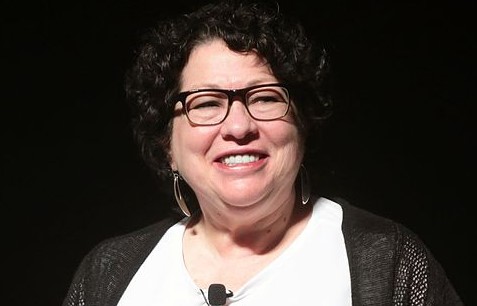
Sonia Sotomayor, a Supreme Court Justice appointed by former President Barack Obama in 2009, has witnessed a significant surge in her net worth since assuming her position, as disclosed in financial documents. Recent revelations shed light on Sotomayor’s endeavors to promote her books, adding a new dimension to her financial growth.
Back in 2007, Sotomayor’s financial disclosure form revealed modest investments valued between $50,001 and $115,000. Her assets at the time consisted of a checking and savings account with Citibank. The following year, her financial disclosure exhibited the same two assets, now totaling $15,001 to $65,000. Even in the year she was nominated and confirmed to the Supreme Court, her investments remained consistent in terms of assets and value.
However, since then, Sotomayor’s net worth has experienced an astounding surge, propelling her into the realm of millionaires. By 2021, her investments amassed between $1.5 million and $6.4 million, as per the financial disclosure forms. The previous year saw similar figures, with investments ranging from $1.6 million to $6.6 million.
Before her nomination to the Supreme Court, Sotomayor earned an annual salary of approximately $180,000 as a federal appeals court judge, supplemented by an additional $25,000 from teaching positions at law schools in the New York area. Upon assuming her role as a Supreme Court justice, her salary increased by several thousand dollars.
Presently, Supreme Court members earn $285,400, with the exception of the Chief Justice, who receives just under $300,000.
One key factor contributing to the substantial growth in Sotomayor’s investments and overall wealth is her income from book sales. Recent reports indicate that her staff has actively encouraged public institutions hosting the justice to purchase her memoir and children’s books. These literary works have garnered Sotomayor at least $3.7 million since her Supreme Court appointment, with ongoing six-figure royalty payments.
According to the Associated Press, Sotomayor’s publisher, Penguin Random House, has played a role in orchestrating her speaking engagements, occasionally pressuring public institutions to commit to buying a specified number of copies or encouraging attendees to purchase books in order to secure tickets.
It is noteworthy that Sotomayor did not recuse herself from Supreme Court cases involving Random House, despite her substantial earnings from the book deal with the publisher.
Responding to the reports, Mike Davis, founder and president of the Article III Project, acknowledged Sotomayor’s mistake in allowing her staff to sell her books and potentially applying pressure on schools and libraries. Davis asserted that the Supreme Court possesses appropriate mechanisms to address such errors and has already taken corrective measures.
Another Supreme Court Justice, Neil Gorsuch, also did not recuse himself from a case involving Random House, despite having his own lucrative book deal with the publisher.
Following the publication of the AP’s report, the Supreme Court issued a lengthy statement defending Sotomayor, refuting any suggestions of impropriety and denying claims that attendees of her events were required to purchase her books.
The ethics concerns surrounding justices’ book deals extend beyond Sotomayor, as multiple current Supreme Court justices have lucrative book agreements. Justice Amy Coney Barrett, for instance, received a reported $2 million advance for an upcoming book. This trend has raised concerns among ethics experts closely monitoring the activities of the high court.
Richard Painter, a former chief White House ethics lawyer and current University of Minnesota law professor, voiced his concern regarding the financial aspect of justices’ book deals. He emphasized that executive branch employees are prohibited from receiving royalties for books related to their official positions. Painter argued that similar restrictions should apply to the judiciary, as justices’ books often cater to specific political factions, potentially influencing their decisions and book sales.
Painter also highlighted the potential conflicts of interest arising from book deals and investments. He recommended that justices refrain from holding individual stocks to avoid conflicts that would necessitate recusal from relevant cases. He further noted that increased income from book advances and royalties could lead to additional investments.
While prominent media outlets have extensively covered the financials and gifts received by Republican-appointed Supreme Court justices, such as Clarence Thomas, the same level of scrutiny has not been applied to Sotomayor’s royalties or her broader wealth growth.
This discrepancy in coverage has drawn criticism from Senator Tom Cotton, who highlighted the different standards applied to conservatives in comparison to liberals.
Painter called for bipartisan legislation to impose ethical rules on the judiciary equivalent to those governing the executive branch. He also advocated for the establishment of an inspector general for the Supreme Court.
At the time of writing, the Supreme Court has not responded to requests for comment on this matter.