
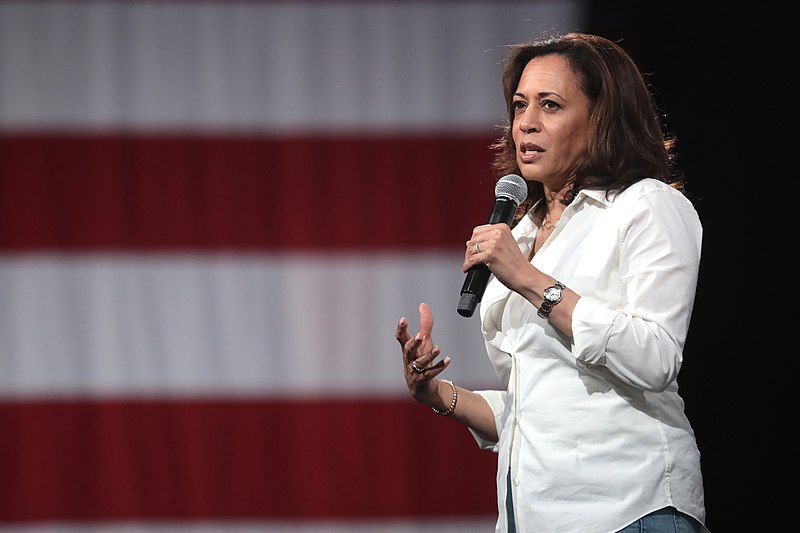
In an interview with The New York Times’ Astead Herndon for the “Run Up” podcast, Vice President Kamala Harris appeared perplexed by questions regarding the significance of President Biden’s decision to select her as his running mate, partly based on her identity as a Black woman. The interview, conducted in Chicago in August, was published on Thursday.
Herndon inquired about Biden’s choice in the 2020 election. Biden had pledged to choose a woman as his vice-presidential candidate, and amidst calls from several key Democrats to select a Black woman, he acknowledged considering Black women among his final candidates.
Herndon posited to Harris that while Biden’s decision focused on choosing a Black woman, it was more about the identity rather than the individual. He asked Harris how significant this narrative should be, questioning whether it mattered that Biden felt the need to choose a Black woman. Harris responded with confusion, indicating she didn’t quite grasp the question.
After Herndon rephrased his inquiry, Harris, laughing, remarked that the selection process had concluded, and Biden had already made his choice – her. She expressed uncertainty about whether the narrative still held any relevance.
The conversation shifted following this exchange, but it highlighted broader discussions surrounding Harris’s vice-presidential role. In October, Herndon reported that Harris’s allies were frustrated by Democratic criticism of her. Senator Laphonza Butler (D-Calif.), appointed to the late Senator Dianne Feinstein’s seat, described the criticism as disrespectful, emphasizing Harris’s significance as a historic and high-quality vice president.
The late Senator Harry Reid (D-Nev.) had previously told The New York Times in 2020 that race played a crucial role in Biden’s decision, arguing that Black women, being the most loyal voters, deserved a Black vice-presidential candidate. The interview with Harris and subsequent discussions underscore the complexities and sensitivities around identity politics in the context of her historic vice-presidential role.