
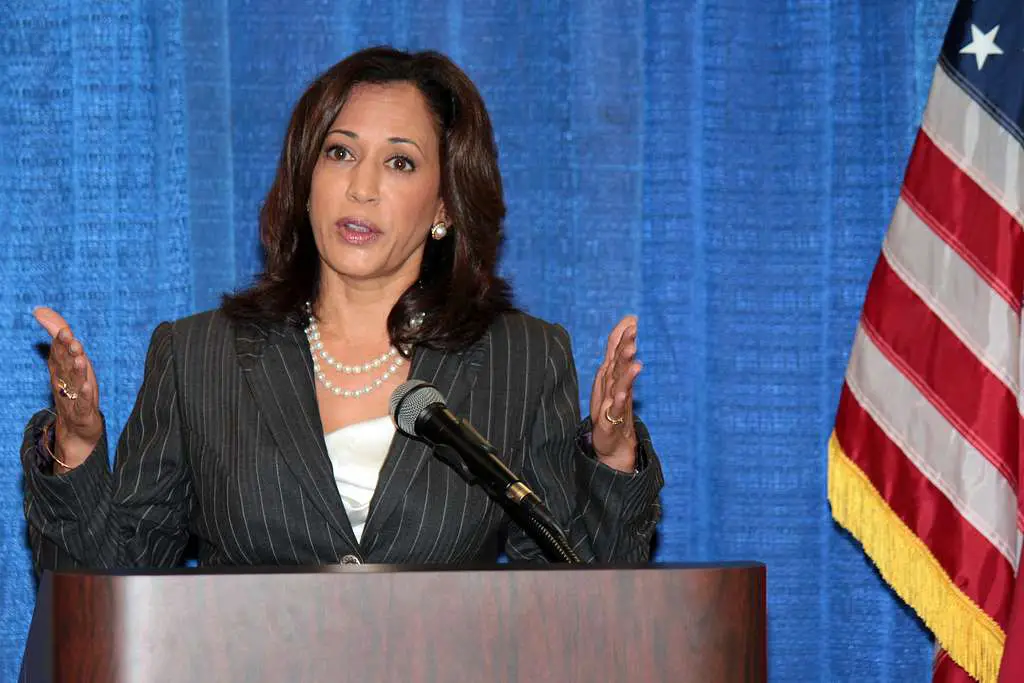
In a recent podcast interview with Jon Stewart, former Vice President Kamala Harris drew widespread attention after strongly defending Joe Biden’s mental and physical capacity to serve a second term. The unexpected exchange took place as Harris reflected on the turbulent final years of the Biden administration and her own role during that period.
When Stewart questioned whether Biden’s age had hindered his leadership, Harris firmly rejected the notion, stating that Biden was “fully competent” and capable of carrying out the responsibilities of the presidency. Her comment appeared to surprise Stewart, who paused before pressing her to clarify her view. Harris elaborated that leadership, particularly in the Oval Office, is about strategic decision-making and delegation rather than constant public visibility or stamina tests.
She explained that much of the criticism directed at Biden overlooked the collaborative structure of the executive branch, arguing that effective governance relies on the strength of the team supporting the president. Harris added that, throughout her time as vice president, Biden consistently demonstrated command of complex policy matters and a deep understanding of global affairs.
Harris also used the opportunity to reflect on her own campaign missteps, acknowledging that she might have underestimated the importance of distancing herself politically from the administration’s controversies. Still, she expressed pride in the work she and Biden accomplished together, citing progress on infrastructure, climate initiatives, and job recovery following the pandemic.
The conversation quickly went viral, sparking renewed debate among commentators and political analysts about Harris’s defense of Biden’s legacy. While some praised her loyalty, others questioned the timing of her remarks amid ongoing scrutiny of the former president’s health and the Democratic Party’s leadership future.
Harris concluded by reiterating her respect for Biden’s service, emphasizing that history would ultimately view his presidency through a lens of endurance and reform rather than age.