
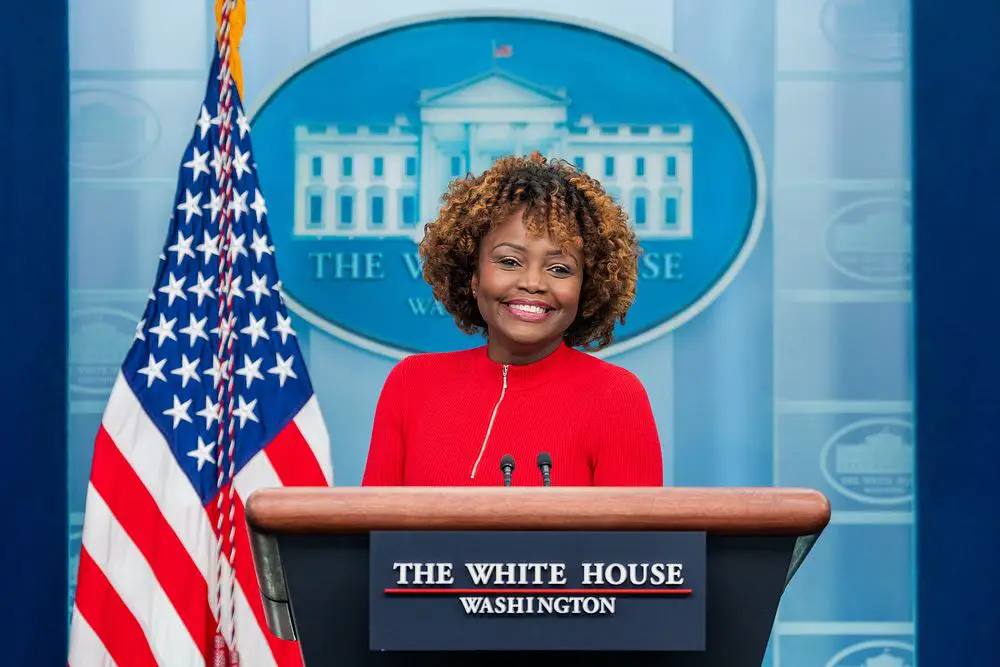
In a recent exchange that captured the attention of many, White House Press Secretary Karine Jean-Pierre unexpectedly concluded an interview with Mark Garrison, the News Director of 99.3 WBT Charlotte, just as the conversation was delving into sensitive topics. The interview, conducted in anticipation of President Joe Biden’s visit to Raleigh, North Carolina, took a turn when Garrison, relaying inquiries he had received, questioned the mental fitness of the President, asking Jean-Pierre if Biden has dementia. Jean-Pierre responded by criticizing the question as “incredibly offensive,” dismissing the premise entirely and suggesting to move on.
Further into the interview, Garrison shifted the focus to economic concerns, inquiring how the President plans to secure votes amid rising gas and grocery prices, and how these financial pressures affect Americans’ disposable income. Jean-Pierre defended Biden’s understanding of economic hardships, attributing challenges to the pandemic’s impact on the economy, the legacy of the previous administration, and external factors such as Russia’s invasion of Ukraine, which she noted had a significant effect on gas prices. She also mentioned the administration’s efforts to address these issues, claiming successes in lowering the costs of essential goods.
The abrupt end to the interview left Garrison and Brett Winterble, host of “The Brett Winterble Show” where Garrison shared his experience, in surprise. Jean-Pierre’s sudden sign-off, followed by a busy signal, prompted Winterble to express disbelief and suggest that Garrison deserved a place in the White House press corps for his pertinent questions. Garrison noted the unexpected nature of the interview’s conclusion, especially since it was the White House that initiated the conversation, expecting to cover more ground.
The White House, through Deputy Press Secretary Andrew Bates, later clarified that Jean-Pierre had back-to-back interviews lined up in connection with the President’s travel plans, each allocated seven minutes. Bates explained that the interview concluded as scheduled, and the next call was promptly made to ensure fair timing for all interviews. He also addressed the aired segment, stating that the station chose not to broadcast the interview in its entirety and criticized the addition of a misleading sound effect as the call ended.
This incident has sparked discussions on the dynamics of political interviews, the administration’s responsiveness to critical inquiries, and the broader implications for public discourse and media relations.