
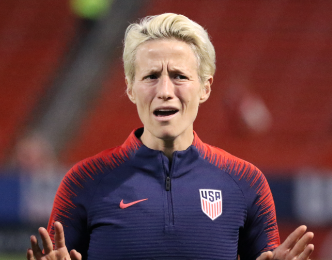
Megan Rapinoe, a name synonymous with the U.S. women’s national soccer team, faced a defining moment during the Women’s World Cup Round of 16 clash against Sweden. A penalty kick opportunity presented itself – a chance to etch her legacy deeper into the annals of sports history, a moment to propel the American squad into the quarterfinals. With the weight of expectations, Rapinoe stepped up to the marker, her focus unwavering. But as the ball sailed high, so did the collective hopes of a nation.
Sweden seized the momentum and sealed victory, bringing about the eventual U.S. elimination from the tournament. The aftermath reverberated with criticism, the storm of disapproval swirling from fans to seasoned analysts like Carli Lloyd and Alexi Lalas. Even former President Donald Trump didn’t hold back, adding his voice to the chorus of critique.
Megan Rapinoe, the embodiment of resilience, confronted this torrent of criticism head-on in a recent interview with The Atlantic. Reflecting on the backlash, she dissected the rhetoric and found it lacking in substance. To her, the criticism was a mosaic of hollow buzzwords and incendiary phrases, disconnected from reality.
In the face of such criticism, Rapinoe remained steadfast. She pointed out the paradoxical nature of the narrative surrounding her team. In 2019, when they showcased an ultra-confident, swaggering persona and clinched victory after victory, they were chastised for their perceived bad taste. This time, when they demonstrated humility and were deemed to lack the “right mentality,” they faced defeat. The inconsistency of the narrative struck her as disingenuous, a puzzle designed to deny them a fair shake.
Rapinoe’s discerning eye also caught the sentiment of critics eagerly waiting for the team to falter. A prevailing narrative seemed to hinge on their supposed “stumbles.” Rapinoe’s critique didn’t stop there; she aimed a pointed remark at what she referred to as the “right wing.” According to her, this faction aimed to implant the notion that women couldn’t simultaneously advocate for change and achieve excellence. They were told that demanding their rightful place and striving for success was an unattainable balance.
The Round of 16 exit marked a departure from the U.S. women’s national team’s usual trajectory. Their dominance on the world stage was evident in two consecutive championships preceding the tournament. Yet, the team’s resilience endures, with players like Megan Rapinoe facing adversity head-on and challenging the narratives woven around them.
As the echoes of criticism resonate, Rapinoe and her teammates persist. Their journey exemplifies the duality of competition – the highs and the lows, the victories and the defeats. But within each chapter, the resounding message remains: they will continue to champion for change, challenge perceptions, and prove that excellence and advocacy can coexist.