
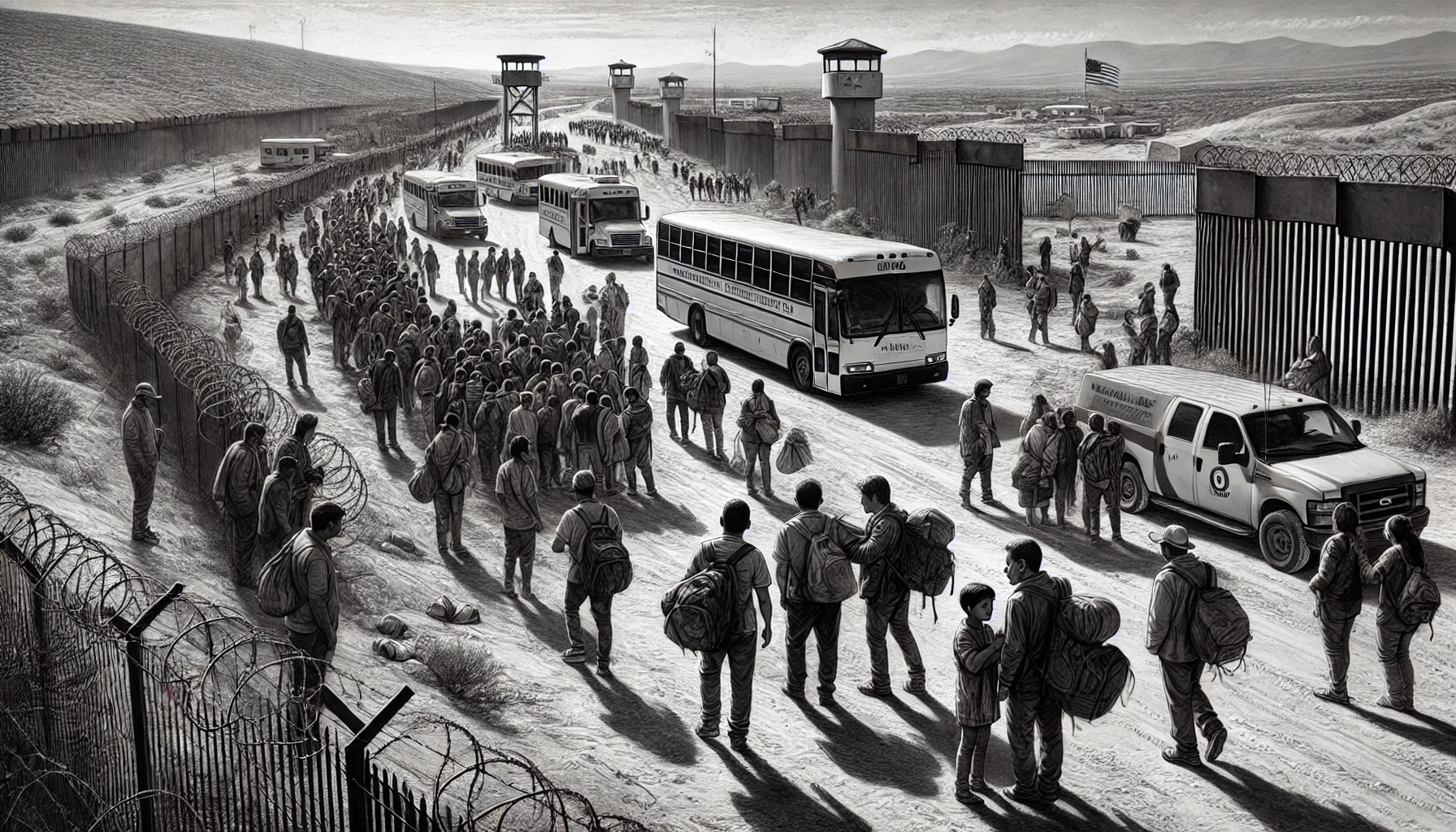
In recent months, there has been a significant change in the behavior of migrants at the U.S.-Mexico frontier. A growing number of individuals are opting to return to their home countries rather than attempting to enter the United States. The reinstatement of stringent border policies under President Donald Trump’s administration is consistent with this trend.
The number of migrants attempting to cross the border has been considerably reduced as a result of the termination of the “catch and release” program and the deployment of additional troops and enhanced security measures. The data suggests a significant decrease in the number of daily encounters at the Texas border, from approximately 8,000 during the previous administration to just over 300 under the current policies.
The “Remain in Mexico” policy has been reinstated, necessitating that asylum seekers await their U.S. immigration proceedings in Mexico. Many migrants have reconsidered their plans as a result of this policy, with some choosing to return home due to the challenging conditions and extended waiting periods in Mexican border cities.
Furthermore, countries such as Venezuela have initiated the process of repatriating their citizens from the United States, indicating a change in international cooperation regarding migration issues. Venezuela has recently dispatched flights to retrieve deported nationals, which could indicate a potential improvement in the relationship between the two countries.
These developments emphasize the influence of the current administration’s border enforcement strategies on migration patterns, as well as the intricate decisions that migrants must make when evaluating the risks and uncertainties of their journeys.