
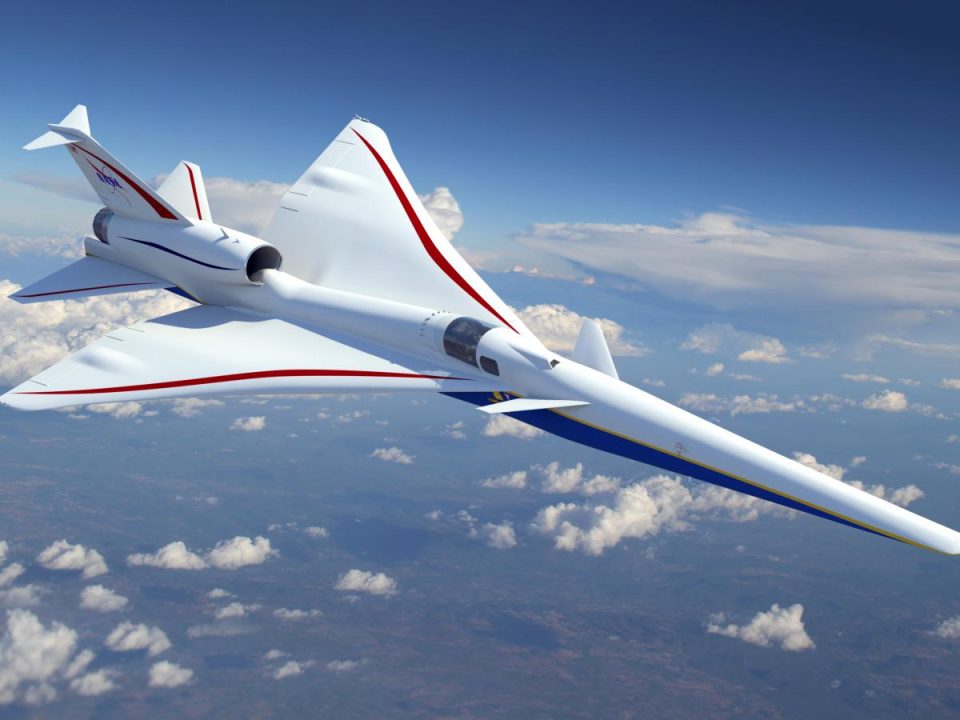
The X‑59, developed by NASA in collaboration with Lockheed Martin, completed its maiden flight Tuesday, marking a major milestone in aviation. The aircraft took off from Palmdale, California and landed safely an hour later at Edwards Air Force Base.
The X-59 is purpose-built to break the sound barrier without generating the traditional loud “boom.” Its elongated nose and streamlined body are designed to produce a low-volume “thump” instead, potentially opening the door to supersonic passenger travel over land.
During the first test flight, the jet flew at sub-sonic speed as planned, focusing on validating systems and air-data performance before moving into high-speed regimes. Engineers say future tests will begin reaching Mach 1+ speeds and higher altitudes.
The aircraft is part of NASA’s ongoing efforts to develop commercially viable supersonic aircraft that meet community noise standards. If successful, the technology could cut long-haul flight times significantly—offering flights across continents in hours rather than the current six to eight.
With the X-59 in the air, aerospace specialists say the aviation industry may be entering a new era of high-speed travel that balances speed with cabin comfort, safety and environmental concerns.