
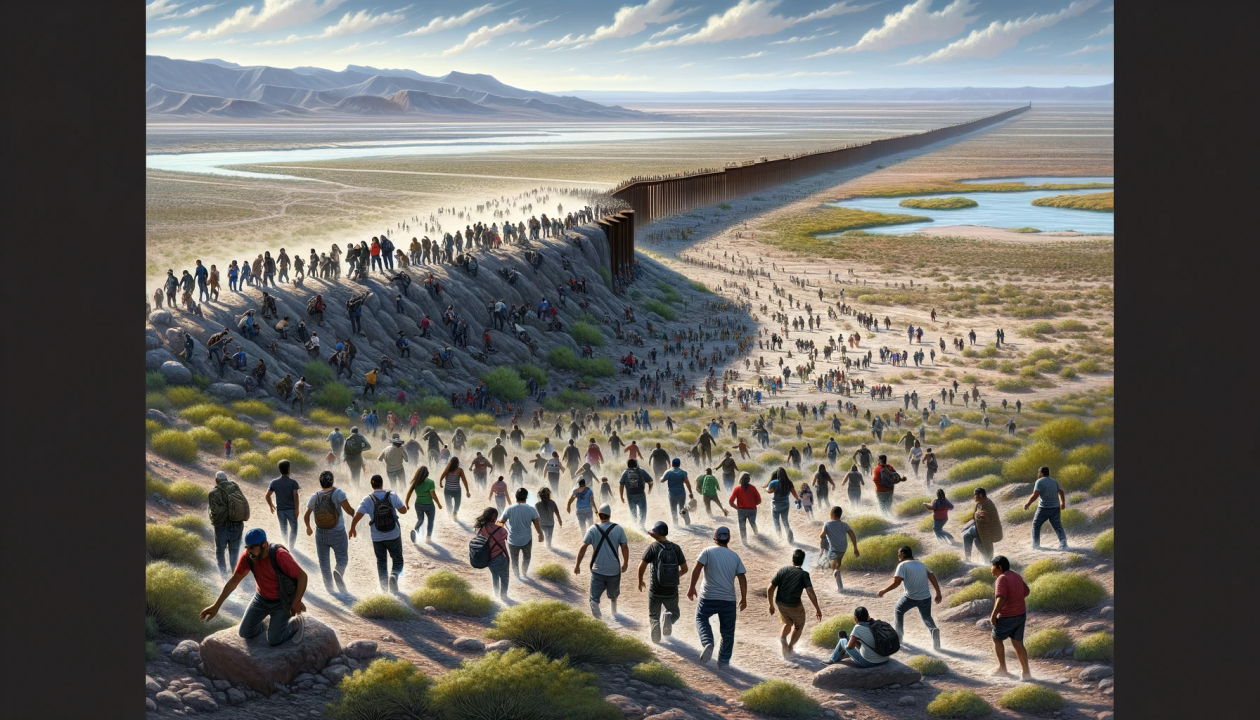
NBC News correspondent Guad Venegas expressed astonishment at the unprecedented number of migrants illegally crossing the U.S. border at Eagle Pass, Texas. Reporting for MSNBC, Venegas highlighted the massive influx of migrants waiting to be processed, with more continuously arriving. This surge in illegal border crossings has reached a record high, with over 12,000 people crossing in a single day.
Venegas, who grew up in a Mexican American household near the U.S.-Mexico border in Southern California, noted that the current situation at Eagle Pass is unlike anything he has witnessed in his reporting career. He shared that his colleagues covering other border areas in Arizona and near San Diego have reported similar observations.
The NBC News correspondent emphasized the strain this influx is placing on resources, with apprehensions and encounters spiking significantly. He reported that local processing centers and hospitals are overwhelmed, as stated by Rep. Tony Gonzales (R-TX). Hospitals are struggling to cope with the demand, affecting their ability to respond to local emergencies.
The situation at the border has prompted bipartisan calls for action from both Republican and Democratic leaders. House Speaker Mike Johnson (R-LA) urged President Joe Biden to use executive orders to secure the border, while Senator Joe Manchin (D-WV) demanded a shutdown of the border, citing overcapacity and safety concerns.
In response to the crisis, Texas Governor Greg Abbott signed a bill granting state authorities the power to arrest illegal immigrants. This move, aimed at curbing the crisis, has been met with criticism from leftist groups and the White House. The American Civil Liberties Union filed a lawsuit against the bill, claiming it is discriminatory and targets minorities.
The escalating situation at the U.S.-Mexico border, particularly at Eagle Pass, Texas, highlights the growing challenges in managing illegal immigration and the impact on local communities and resources. The response from federal and state authorities continues to evolve as they grapple with the complexities of this humanitarian and security issue.