
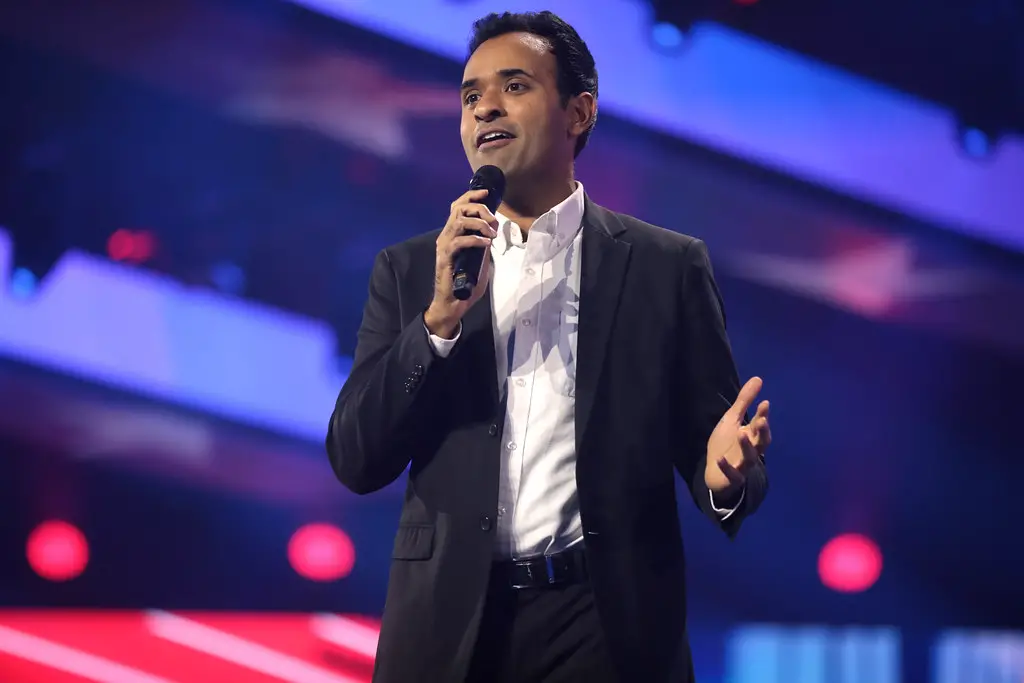
During a recent appearance on MSNBC, Vivek Ramaswamy, a potential Republican presidential candidate for 2024, engaged in a lively debate with host Andrea Mitchell over the impacts of climate change. Mitchell had mentioned Ramaswamy’s previous comment about climate change being a “hoax” during a GOP debate, prompting a heated discussion about climate-related deaths.
Mitchell presented data from a U.N. agency indicating that over the past five decades, two million people had lost their lives due to extreme weather events compounded by climate change. She challenged Ramaswamy to provide evidence supporting his claim that clean energy policies were causing more deaths than actual climate change.
In response, Ramaswamy presented a counterargument, suggesting that technological advancements powered by fossil fuels had played a significant role in reducing climate-related deaths by a staggering 98% over the last century. He emphasized that access to abundant fossil fuels had enabled the development of technologies that offered protection against weather-related disasters.
Ramaswamy also highlighted an interesting observation—eight times as many people perish due to cold temperatures than warm ones. He emphasized that the key to minimizing temperature-related deaths lay in providing widespread access to fossil fuels, which could help maintain warmer conditions and mitigate the risks associated with extreme cold.
However, the conversation took an unexpected turn when Mitchell brought up Hurricane Idalia and anecdotes from Floridians expressing concern about the warming oceans. Ramaswamy interrupted her to point out the potential fallacy in using isolated anecdotes to support broader climate change claims. Drawing a comparison, he humorously noted that if an uneducated individual from a remote area attempted the same tactic, they would likely be dismissed as lacking data-driven analysis.
Ramaswamy maintained that the focus should remain on factual data rather than individual opinions, regardless of whether those opinions come from experts or academics. He emphasized that shaping a narrative around one event could lead to a skewed understanding of the complex issue of climate change.
The debate between Ramaswamy and Mitchell highlighted the ongoing discourse surrounding climate change, the importance of empirical evidence, and the need for nuanced discussions that go beyond singular anecdotes.