
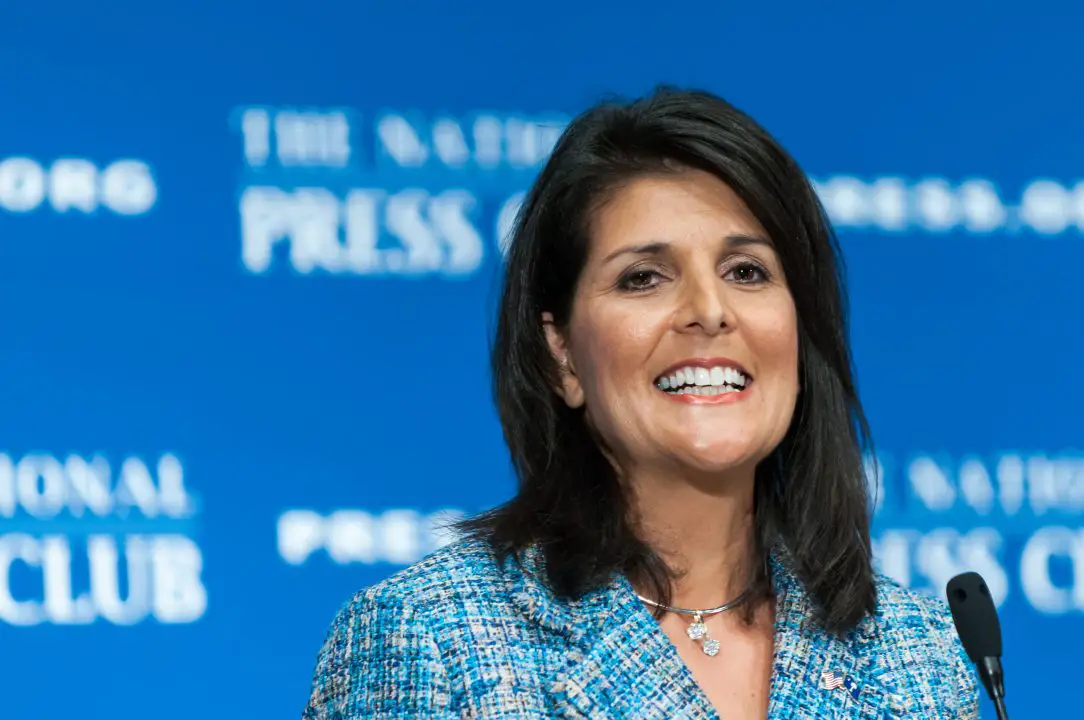
Republican presidential candidate and former South Carolina Governor Nikki Haley has found herself at the center of a controversy following her comments in a June TV interview about transgender youth and medical interventions. Haley, during an interview with CBS, stated that legal authorities should not interfere in situations where children, identifying as transgender, seek gender-affirming treatments, advocating instead for parental decision-making in these matters.
CBS questioned Haley on her stance regarding children expressing a desire to undergo gender transition. Haley responded, “I think the law should stay out of it, and I think parents should handle it.”
This comment quickly sparked a flurry of reactions on social media, with many expressing strong opposition to Haley’s viewpoint. Influential conservative Robby Starbuck was among those who voiced concern, arguing on social media that legal intervention is necessary to prevent what he views as child abuse. His sentiment was echoed by numerous others who expressed disbelief and disapproval of Haley’s perspective.
One social media user criticized Haley’s stance as unacceptable, arguing that allowing children to make life-altering decisions about gender transition is akin to child abuse. Others highlighted the contrast between age restrictions on activities such as getting tattoos or purchasing alcohol, compared to the lack of legal constraints on gender transition for minors.
Another individual condemned the support of what they termed “child genital mutilation,” emphasizing the potential permanent consequences of such medical interventions on children. They argued that while following trends is typical in adolescence, decisions leading to permanent sterilization are entirely different and should be approached with caution.
The issue of transgender youth and medical interventions remains a contentious topic in political and social discussions, particularly in the context of the current Republican presidential primary. Haley’s comments have intensified the debate, highlighting the complex intersection of parental rights, child welfare, and medical ethics in the discussion of transgender youth and healthcare.