
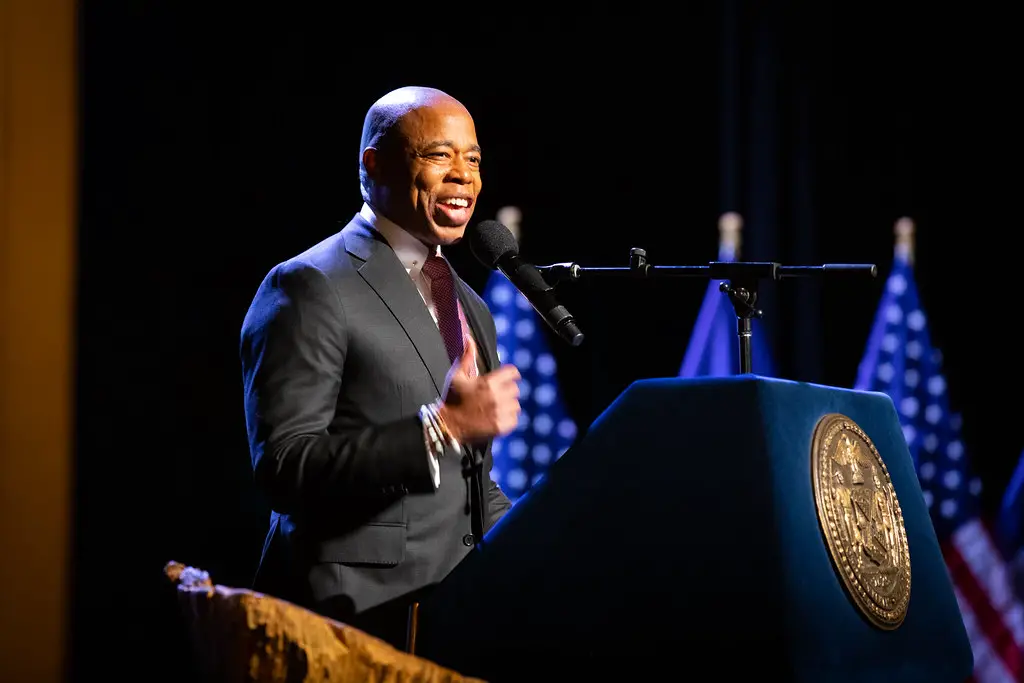
In a significant policy shift, New York City Mayor Eric Adams has called for migrants charged with criminal offenses to be deported from the city. The announcement marks a departure from previous approaches and has ignited a debate over immigration enforcement and public safety in one of the nation’s most prominent sanctuary cities.
Adams, addressing the growing concerns about crime and resource strain, argued that individuals who engage in illegal activity should not be allowed to remain in the city. He emphasized that New York has long been a place of opportunity for migrants, but maintained that this opportunity should not extend to those violating the law.
The mayor’s remarks come as the city faces mounting challenges from an influx of migrants, with shelters and social services operating at capacity. Adams has expressed frustration over what he perceives as a lack of federal support in addressing the migrant crisis, stating that local resources are being stretched thin.
Critics of Adams’ proposal argue that it risks undermining the principles of a sanctuary city, which aims to protect undocumented immigrants from deportation for minor infractions. Advocacy groups have raised concerns that such measures could deter migrants from reporting crimes or seeking assistance out of fear of deportation.
Supporters of the policy shift, however, argue that prioritizing the deportation of migrants charged with crimes is a necessary step to ensure public safety and allocate city resources more effectively. They contend that individuals who commit crimes should not be allowed to remain in communities where they pose a potential threat.
Adams, aware of the potential backlash, doubled down on his position, stating that his focus is on maintaining a safe and stable environment for all New Yorkers. He framed the proposal as a balanced approach to addressing the dual challenges of supporting migrants while ensuring accountability for criminal behavior.
As the debate unfolds, Adams’ stance is expected to draw both support and criticism from local officials, community leaders, and national immigration advocates. The policy shift adds another layer to the complex conversation about immigration enforcement, public safety, and the responsibilities of sanctuary cities in addressing broader systemic issues.