
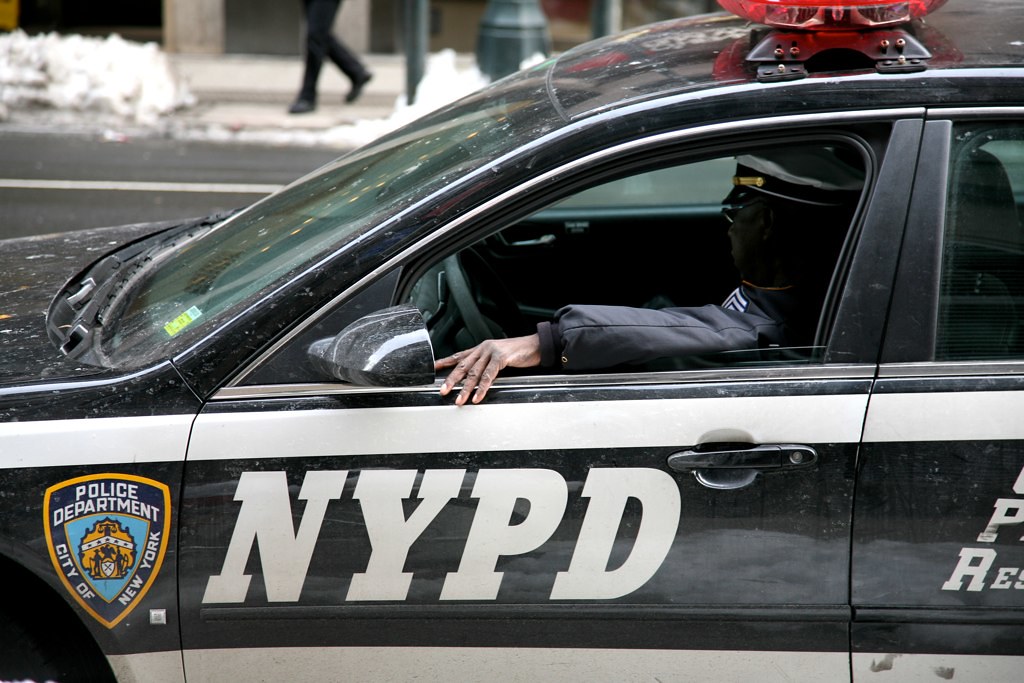
The New York City Police Department has announced its plan to employ surveillance drones over the city during the upcoming Labor Day weekend. This decision stems from concerns about large gatherings, such as outdoor parties and barbecues, which have prompted complaints from the public.
The revelation came during a security briefing addressing J’ouvert, an annual Caribbean festival commemorating the end of slavery, during which thousands of participants take to the streets of Brooklyn.
Assistant NYPD Commissioner Kaz Daughtry disclosed this strategy during a press conference on Thursday, outlining that the drones will be utilized for both non-priority and priority calls. Daughtry explained, “For example, if we receive any 311 calls on our non-emergency line reporting a large crowd or a significant backyard gathering, we will mobilize our drone resources to investigate the situation. This will allow us to verify the nature of the call and determine the necessary resources to dispatch to the location over the weekend. Our drone team will be in operation from tonight through Monday morning.”
However, this plan has ignited criticism from privacy advocates and civil liberties proponents who question whether deploying drones in this manner might violate existing laws governing police surveillance.
“It’s a concerning announcement and appears to contradict the principles of the POST Act,” remarked Daniel Schwarz, privacy and technology strategist for the New York Civil Liberties Union, referencing a 2020 city law mandating transparency in NYPD surveillance methods. Schwarz went on to say, “The use of drones in this manner seems like something out of a science fiction scenario.”
New York City, like many other urban areas, has seen an increasing reliance on drones for law enforcement purposes. City records indicate that the police department has deployed drones 124 times this year, marking a substantial increase compared to just four deployments in all of 2022.
Mayor Eric Adams, a Democrat and former police captain, has expressed his desire for the police force to fully embrace the “boundless” potential of drone technology. He cited Israel as a model for this approach after a recent visit to the country.
Nevertheless, privacy advocates caution that regulations have struggled to keep pace with technological advancements, potentially opening the door to invasive surveillance practices that would be unlawful if carried out by human police officers.
“One of the primary concerns with the rapid adoption of aerial surveillance is the lack of safeguards against the possibility of these cameras being directed at our backyards or even our bedrooms,” emphasized Albert Fox Cahn, executive director of the Surveillance Technology Oversight Project.
While a spokesperson for Mayor Adams shared guidelines facilitating private drone operation within the city, these guidelines do not address whether the police department has established specific policies regarding drone surveillance.
Across the nation, around 1,400 police departments are employing drones in various capacities, according to the American Civil Liberties Union. Federal regulations generally restrict unmanned aircraft to flying within the operator’s line of sight, although many police departments have sought exemptions. The ACLU anticipates a potential surge in the use of drones by law enforcement agencies.
Cahn urged city officials to provide greater transparency to the public regarding the use of drones by the police, including establishing clear boundaries to prevent potential overreach in surveillance efforts.
“Clearly, deploying a drone over a backyard barbecue raises significant concerns for many New Yorkers,” Cahn concluded.