
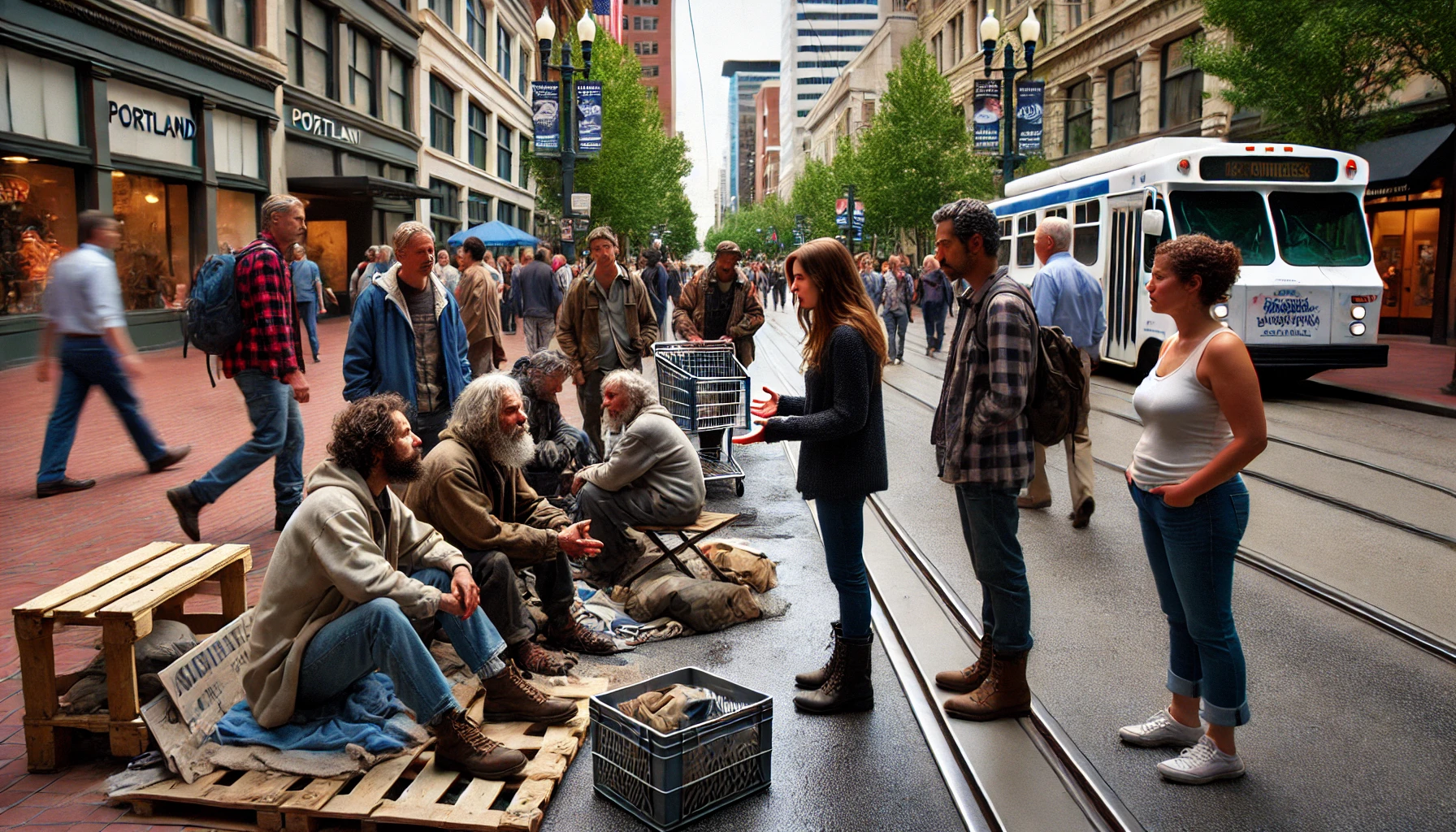
In Portland, a woman recently confronted a group of homeless men after suspecting they had stolen her phone. The interaction highlighted her frustrations with theft but also revealed her nuanced perspective on the issue. While she condemned the act of stealing, she expressed sympathy for those struggling with homelessness and placed blame on broader societal structures, such as economic inequality and systemic issues.
The woman, who stated she had previously experienced homelessness herself, appealed to the men to return her property. While she did not condone theft, she suggested that targeting the wealthy—whom she referred to critically—might be more justifiable in her eyes than taking from individuals like her who are not financially privileged. Despite her efforts to reason with the men, her phone was not returned.
Choosing not to involve law enforcement, the woman explained that she believed the root causes of such incidents stemmed from issues like addiction, poverty, and lack of resources. The encounter underscored the challenges urban areas face in addressing theft, homelessness, and the underlying conditions that fuel such behaviors.