
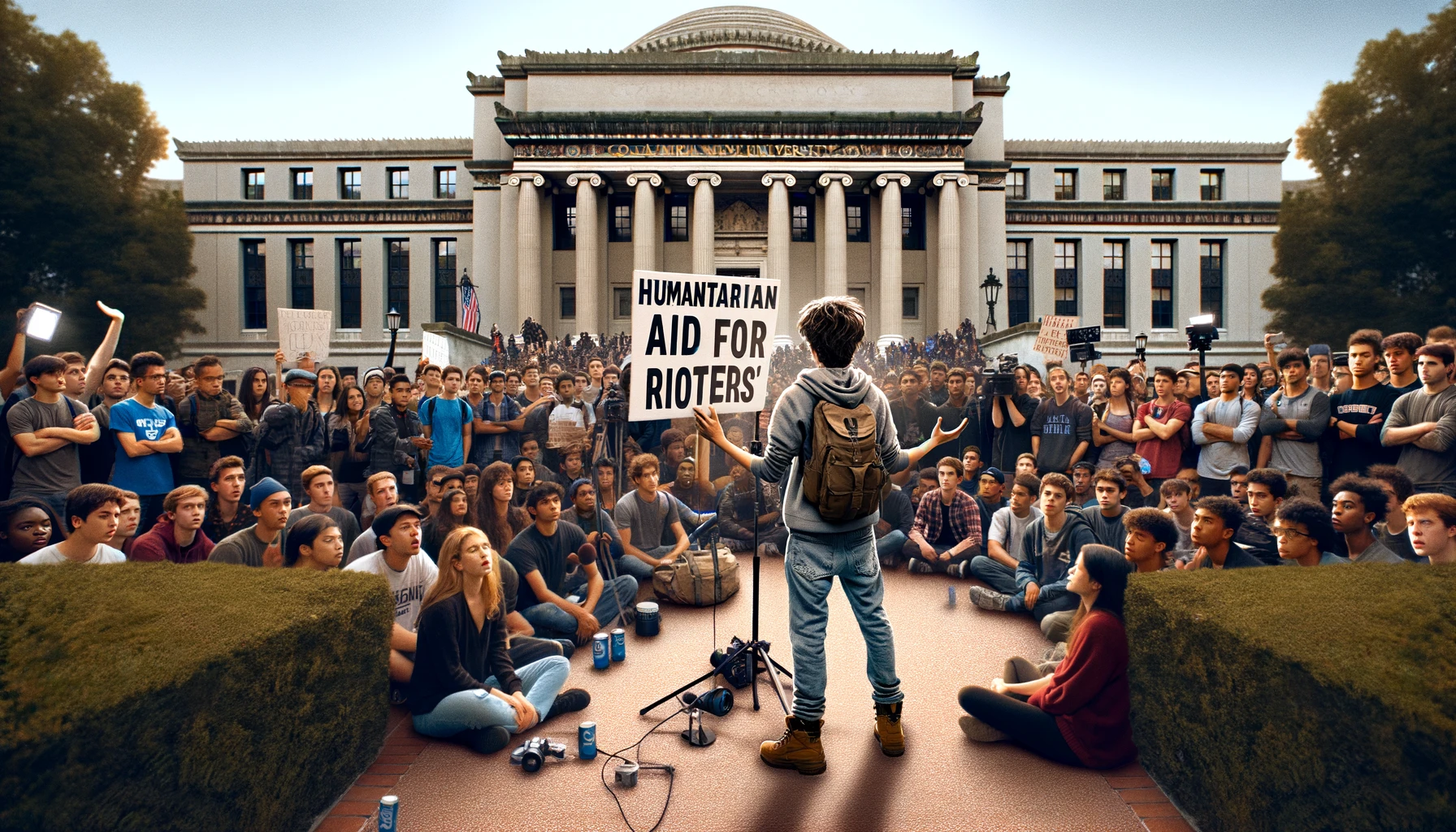
At Columbia University, a recent protest has sparked significant debate. A protester, previously employed by a consulting firm used by former NYC Mayor Bill de Blasio, publicly demanded that the university provide “basic humanitarian aid” such as food and water to students who had occupied a campus building as part of an anti-Israel demonstration.
The incident unfolded early Tuesday when a group, described as pro-terror by some, stormed Hamilton Hall, leading to a campus lockdown. This occupation has disrupted daily activities and raised safety concerns. The protester argued that the university should ensure the welfare of its students by allowing aid to reach those inside the occupied building. She challenged the idea that students should suffer dehydration or starvation due to their political stance.
During a confrontation caught on video, a reporter critiqued the protesters for demanding university support after choosing to take over a building. The protester countered by insisting they were not asking for direct provision of supplies by the university, but rather not to be impeded in receiving outside help.
The situation has brought to light the protester’s background as a doctoral student at Columbia focusing on Marxist analysis in literature and her past involvement in left-leaning political strategy. The university has yet to respond to the demands, and the escalation continues to affect both the protesters and the broader student body. The protest leader emphasized the commitment of the occupiers, suggesting that any punitive measures from the university would only solidify their resolve.
This ongoing conflict at Columbia highlights the tension between student activism and institutional control, reflecting deeper national and international political divides.