
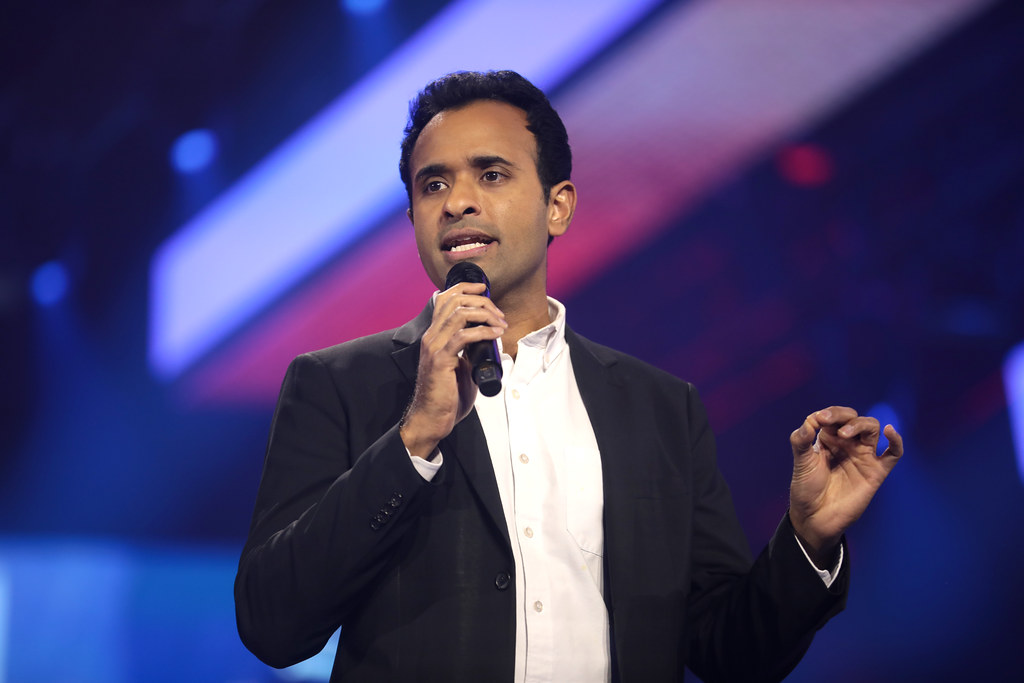
Vivek Ramaswamy, a former Republican presidential candidate, recently shared his insights on the Supreme Court’s unanimous decision to keep former President Donald Trump on the Colorado ballot for the 2024 elections. Speaking on “Hannity,” Ramaswamy lauded the Court’s ruling as a pivotal moment for national unity, emphasizing the importance of maintaining a unified approach to presidential candidate eligibility across states. He interpreted the decision as a rejection of the idea that individual states could unilaterally determine a national candidate’s eligibility beyond standard age and tenure requirements.
Ramaswamy highlighted the significance of the ruling not just for Trump but for the broader principle of national cohesion. He pointed out that the Supreme Court’s unanimous agreement underscored the collective understanding that the United States must operate as one entity, especially in matters of national elections.
However, Ramaswamy also cautioned viewers about the potential implications of the concurrence written by the Court’s three liberal justices—Ketanji Brown Jackson, Sonia Sotomayor, and Elena Kagan. He suggested that their agreement on this case might offer them “political latitude” for future decisions involving Trump. According to Ramaswamy, the liberal justices’ concurrence hinted at the possibility of different outcomes in upcoming Trump-related cases, suggesting they might diverge from their conservative counterparts in future rulings.
The discussion also touched on the broader context of the Supreme Court’s role in American democracy, particularly regarding its efforts to preserve its institutional legitimacy under Chief Justice John Roberts. Ramaswamy praised the Court’s unanimous decision as an “outstanding outcome” but reiterated his concern that the liberal justices’ concurrence could signal a willingness to approach future Trump-related cases differently.
Ramaswamy’s comments reflect the ongoing debate about the Supreme Court’s impartiality and its impact on American politics. As Trump potentially faces more legal challenges in the Supreme Court, the implications of the justices’ decisions will continue to be a subject of intense scrutiny and discussion.