
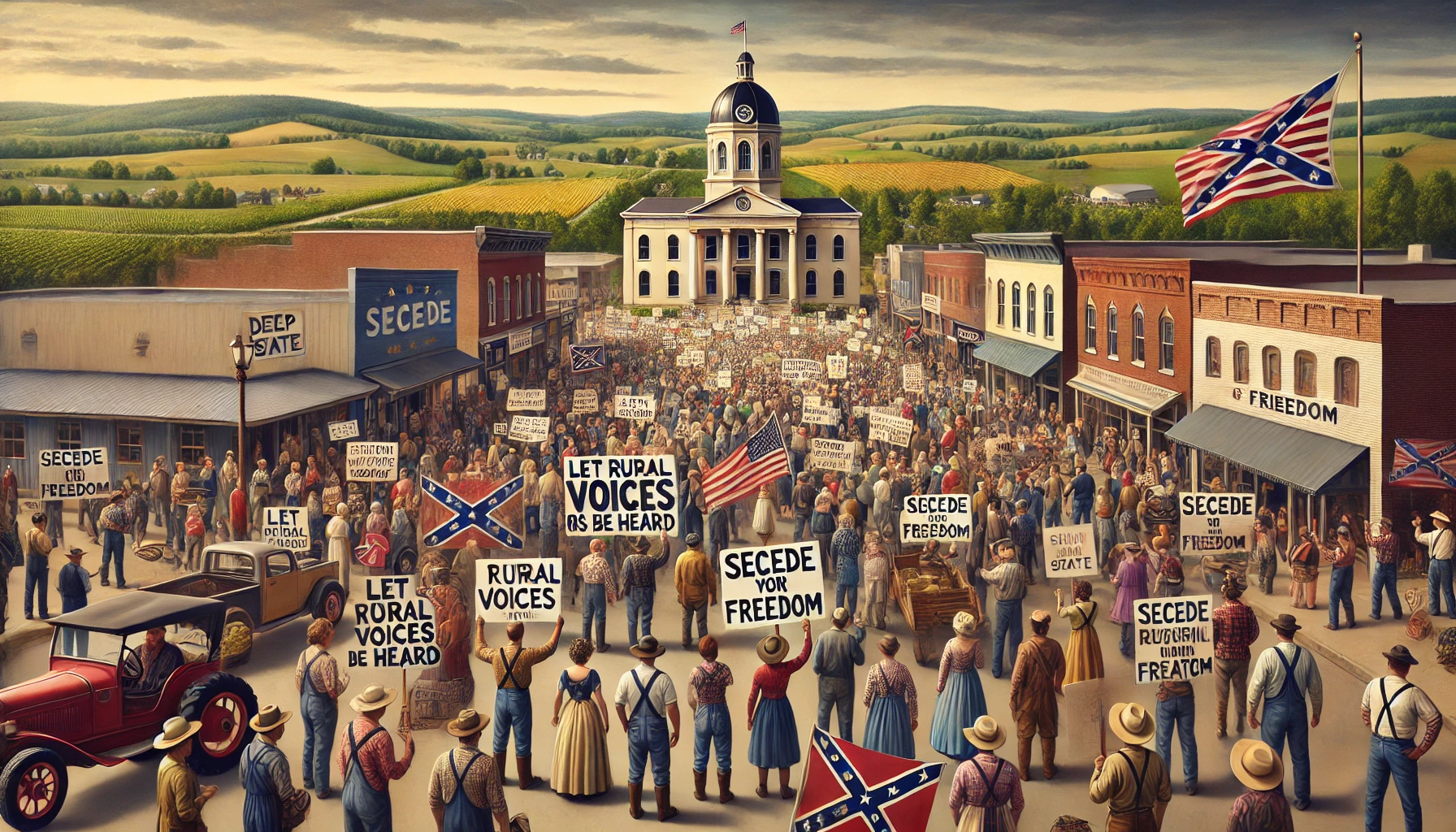
A growing movement in rural counties across California and Illinois is advocating for secession from their respective states, citing frustrations over political and cultural divides with urban areas. Supporters of the movement argue that the policies of their state governments, largely shaped by the interests of liberal-dominated cities, fail to represent the needs and values of rural communities.
In California, counties in the northern part of the state are renewing efforts to form the State of Jefferson, a long-standing proposal for a new state that reflects the priorities of agricultural and rural residents. Advocates claim that state laws on taxation, environmental regulations, and gun control disproportionately affect their livelihoods and freedoms.
Meanwhile, in Illinois, counties in the southern and central regions are calling for the creation of a new state that would separate them from the influence of Chicago. They argue that economic and social policies driven by the city do not address the challenges faced by rural populations, such as declining industries and lack of infrastructure investment.
The secession campaigns face significant legal and political hurdles, as creating a new state requires approval from both the state legislature and Congress. Opponents of the movements argue that division is not a practical solution and call for dialogue to bridge the political and cultural gaps.
These efforts highlight deepening political polarization between urban and rural areas in the United States. While the prospect of secession remains unlikely, the movements underscore the growing discontent among rural communities seeking greater representation and autonomy in state governance.