
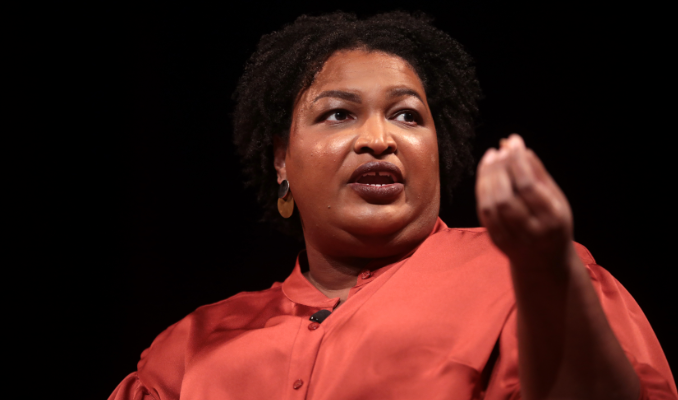
Stacey Abrams, a notable figure in the Democratic party, recently spoke out on the matter of biases affecting the perception of Vice President Kamala Harris. In an exclusive interview on MSNBC’s “Inside with Jen Psaki,” the prominent Democrat and former gubernatorial aspirant from Georgia, expressed her views on Sunday that Vice President Harris is unfairly judged due to persistent prejudices in the political arena.
Abrams emphasized that the scrutiny faced by Harris goes beyond mere policy critique and is deeply entwined with her identity. “When it comes to our leaders, particularly those who are breaking new ground, the lens through which they are seen is often tinted with the long-standing biases of racism and sexism,” Abrams stated. She further discussed the disparity in expectations, noting that “the mold of leadership has been cast in a certain form for generations—white and male—and deviations from this norm are not only scrutinized more harshly but often through a lens distorted by gender and racial biases.”
Abrams also noted that while not every criticism may stem from these biases, it is crucial to recognize the disproportionate impact they have on how leaders like Harris are judged and portrayed.
Vice President Harris has taken on significant challenges during her tenure, including addressing the root causes of migration, advocating for abortion rights, pushing for comprehensive gun legislation, and safeguarding voting rights. These efforts underscore her role in tackling some of the most pressing issues facing the nation.
Despite Abrams’ staunch defense of the Vice President, public opinion polls suggest a decline in support for both Harris and President Joe Biden. A recent survey by The New York Times indicated a shifting political landscape, with hypothetical matchups showing former President Donald Trump gaining an edge over Biden in key battleground states, and even more so against Harris.
This poll, which emerges amidst international conflicts and national unrest, particularly with the ongoing situations in Ukraine and Israel, points to a populace grappling with the current administration’s responses to these complex issues. As the country approaches critical elections, the dynamics within the political sphere continue to evolve, reflecting broader sentiments and the challenges that leaders face not only in policy but also in public perception.