
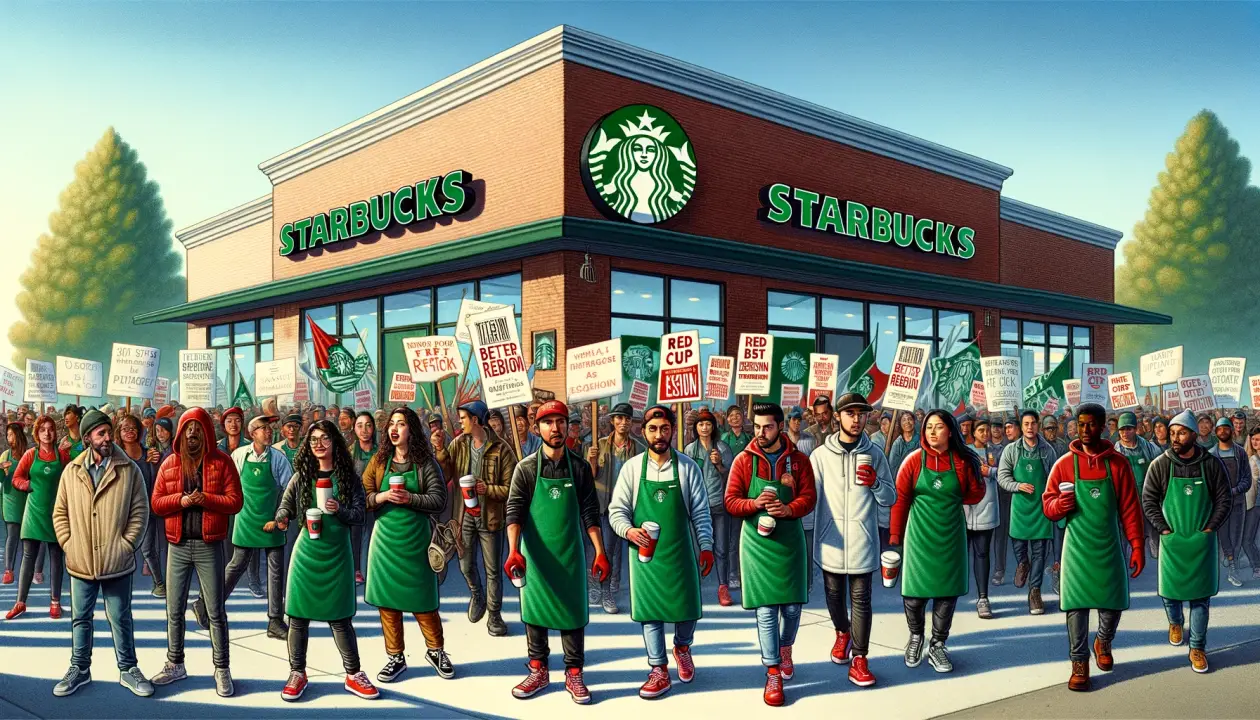
On Thursday, a significant number of Starbucks employees across the United States participated in a strike dubbed the “Red Cup Rebellion.” The strike, organized by Starbucks Workers United, coincided with the company’s popular “Red Cup Day,” a promotional event offering free reusable holiday cups with certain beverage purchases.
Starbucks Workers United took to social media to announce the strike, indicating that in addition to the mass employee walkout, around 500 supportive actions were taking place at Starbucks stores nationwide. The union’s demands center on improved staffing, scheduling, and addressing other workplace concerns, as reported by Axios.
Despite the widespread strike, Starbucks expressed confidence that customers interested in the Red Cup Day promotion would still be able to participate. The company acknowledged the union’s activities but noted that they affected only a small subset of its U.S. stores. Starbucks also stated that despite the union’s public demands, there had been no progress in contract negotiations for over four months.
According to WFAA, one of the key demands from the union is better pay. A local union representative in Texas emphasized the strength and influence of even small local unions in driving change. The representative highlighted the strategic timing of the strike, aiming to impact one of Starbucks’ most profitable days and demonstrate the workforce’s value and power.
The AFL-CIO, a federation of unions, also encouraged public support for the strike with a rallying social media post. The organization’s involvement underscores the broader labor movement’s support for the Starbucks employees’ efforts.
This isn’t the first time Starbucks employees have organized a strike. In June, about 150 store locations reportedly held a strike over a dispute involving LGBTQQIAAP2s+ Pride decorations, as covered by Breitbart News. The “Red Cup Rebellion” represents a significant escalation in the ongoing tensions between Starbucks and its unionized workers, highlighting critical issues in labor relations within the service industry.