
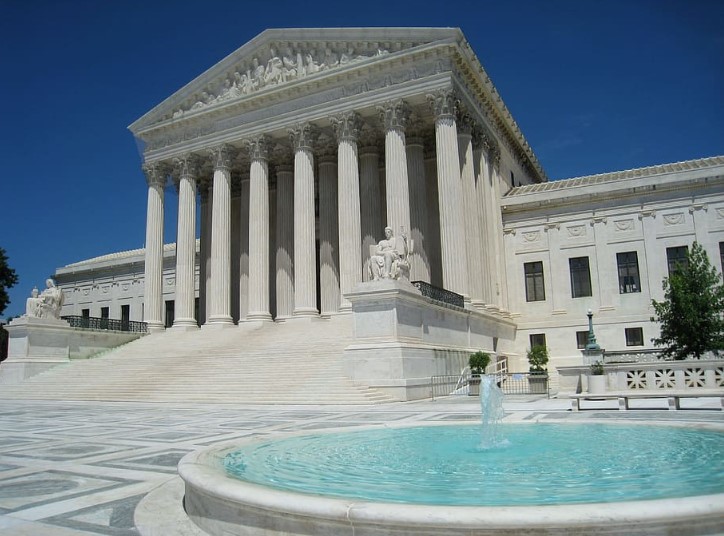
The Supreme Court’s landmark affirmative action ruling effectively outlaws the consideration of race in the admissions process. University of North Carolina at Chapel Hill (UNC) and Harvard University’s racial affirmative action admissions rules were ruled illegal in a 6-3 judgment. Long-standing affirmative action measures aimed at enhancing the number of Black and Hispanic students in colleges will be terminated as a result of the verdict, which has sparked a nationwide debate. The onus is now on universities to innovate new methods of fostering inclusive and representative student groups.
Chief Justice John Roberts said in the majority opinion that the admissions policies at Harvard and UNC were discriminatory because they relied on racial stereotypes and did not have clear goals. He argued that people should not be labeled by their skin tone, but rather by the obstacles they’ve overcome, the abilities they’ve honed, and the life lessons they’ve absorbed. Amy Coney Barrett, Samuel Alito, Clarence Thomas, Neil Gorsuch, and Brett Kavanaugh, all Republican appointees, sided with Roberts, while Ketanji Brown Jackson, Sonia Sotomayor, and Elena Kagan, all appointed by Democratic presidents, dissented.
In 2014, the conservative nonprofit group Students for Fair Admissions challenged the colleges’ race-based admissions policies in a lawsuit, claiming that the policies violated Title VI of the Civil Rights Act of 1964 and the Fourteenth Amendment’s Equal Protection Clause. After winning in lower courts, Harvard and UNC took their cases to the Supreme Court for oral arguments in 2017.
The case against Harvard stated that affirmative action rules unfairly harmed Asian American students, who, despite having strong GPAs, received lower ratings on Harvard’s subjective “personal rating scale” compared to other applicants. Harvard and UNC both claimed that Asian Americans were not disadvantaged by their use of race as an admissions factor.
According to Justice Thomas, the second black justice ever appointed, racial preferences in admissions are “rudderless” and only serve to enforce a predetermined racial composition of incoming classes. Despite knowing that people of his own race had been discriminated against, he expressed in his concurring opinion his unwavering belief that all Americans will be treated fairly under the law.
Justice Sonia Sotomayor, selected by Democratic presidents, said that the ruling reverses decades of progress and establishes a “shallow rule of colorblindness” in a society that is fundamentally racist. First black female justice Ketanji Brown Jackson referred to the 6-3 vote as a national tragedy.
Justice Jackson claimed that the majority’s reasoning ignored the racial disparities that continue in areas beyond the military because it excluded military colleges from its scope due to their presumably different interests.
Democrats, including Senate Majority Leader Chuck Schumer, saw the judgment as a defeat for racial justice, while Republicans, including former Vice President Mike Pence, hailed it as the end of racial discrimination. 2024 presidential candidate Nikki Haley added her support, stating that the decision would provide every student, regardless of their background, with a better opportunity to achieve the American Dream.
According to the NCES, the degree of diversity in American universities varies widely. In 2021, enrollment among Asians was 60% among those aged 18-24, while White enrollment was 38%. Blacks, Hispanics, and Native Americans made up a smaller percentage of the student body (37%-28%). Arizona, California, Florida, Idaho, Michigan, Nebraska, New Hampshire, Oklahoma, and Washington are just a few of the states that do not allow racial preferences to be taken into account during the college admissions process.