
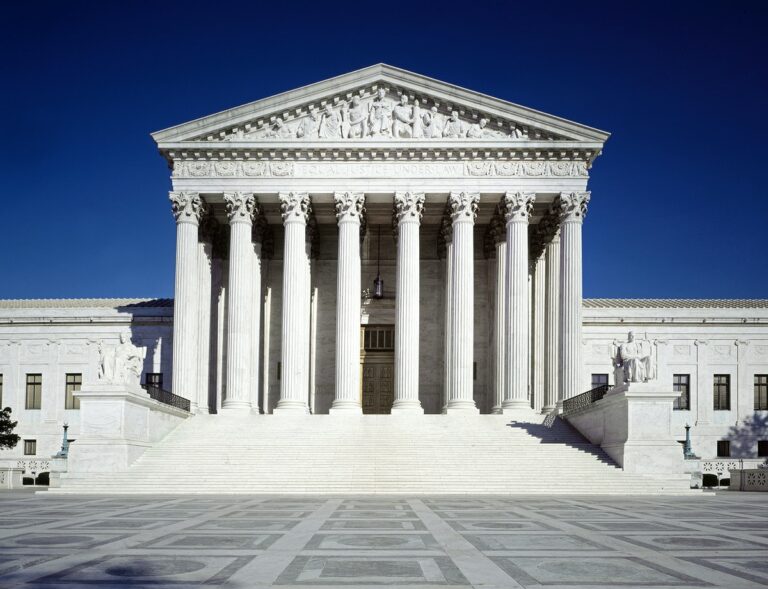
The Supreme Court has invalidated a central part of President Donald Trump’s tariff strategy, ruling that his administration overstepped its authority in imposing broad import taxes under an emergency powers statute. The decision marks a major legal setback for a pillar of Trump’s economic policy aimed at countering unfair trade practices.
In its ruling, the Court determined that the President did not have the statutory authority to implement wide-ranging tariffs without clear approval from Congress. The judgment significantly limits the executive branch’s ability to use that particular emergency trade law to impose sweeping duties on foreign goods.
Although the specific tariff order known as the “Liberation Day tariffs” has been struck down, the Court’s ruling acknowledges that other laws could potentially be used to reinstate similar measures. Some legal frameworks still available to the administration might provide alternative pathways for imposing tariffs with a clearer legislative basis.
The decision reshapes the landscape of U.S. trade policy by reinforcing the role of Congress in authorizing major tariff actions and curbing unilateral executive authority. Administration officials are now exploring other statutory options and legal strategies that could allow the restoration of tariff protections without running afoul of the Court’s interpretation.
While the administration continues to emphasize the importance of strong trade enforcement in protecting American industries, the ruling has triggered debate in Washington over the proper balance of power between the executive branch and Congress in setting economic policy. Lawmakers and trade officials are assessing what legislative or regulatory changes might be needed to support future tariff initiatives within constitutional boundaries.
The Supreme Court’s decision represents a pivotal moment in the ongoing discussion over U.S. trade authority, with implications for future tariff actions and the broader approach to managing foreign competition.