
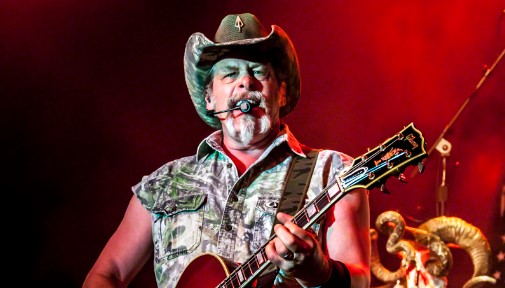
In the realm of music, a forceful clash of perspectives has emerged, and the Motor City Madman himself, Ted Nugent, is stepping into the spotlight to add his distinctive voice to the debate surrounding Jason Aldean’s controversial hit, “Try That In A Small Town.” In a candid interview, Nugent unabashedly addresses the critics who disdain the song, branding them as “idiots” who have misconstrued its true essence.
With his trademark candor, Nugent contends that the song is, in fact, an impassioned call against violence, an anthem of self-defense, and a plea to safeguard one’s loved ones and neighborhood. To him, the critical misunderstanding seems to reflect a trend of misinterpreting bold expressions that dare to push back against societal norms.
No stranger to controversy himself, Nugent has faced off against the prevailing liberal ideology on numerous hot-button issues, earning him the label of an “extremist.” However, he seems to revel in this title with a touch of sarcasm, embracing his unwavering stand for “truth, logic, and common sense” in defiance of the prevailing cancel culture.
As the controversy swirls around Aldean and his song, Nugent finds himself on the side of those who argue fervently in favor of its message of self-defense. Despite being removed from CMT, the song defied the odds and catapulted to the top of the charts, emboldening its supporters, who are now calling for a boycott of the network in response.
In the digital battlefield of social media, opinions clash fiercely as netizens rally to defend or critique Aldean’s song. Nugent highlights the global reach of social media, with countless supporters echoing his family’s rallying cry: “Go, Jason, go… we salute you, and we stand with you.”
While Aldean counts esteemed figures like Lee Greenwood, Travis Tritt, Vivek Ramaswamy, and former President Donald Trump among his supporters, the singer also faces criticism from detractors like Tennessee state Rep. Justin Jones, comedian Andy Richter, and singer Sheryl Crow. The debate rages on, with the song’s music video, featuring footage from the tumultuous 2020 riots following George Floyd’s death, adding fuel to the already blazing fire.
Undeterred by the backlash, Aldean takes to social media to address the allegations, vehemently denying any promotion of violence or opposition to the nationwide Black Lives Matter protests. He firmly dismisses such claims as “meritless and dangerous,” standing his ground with determination.
In this ever-evolving symphony of opinions and counterarguments, the musical landscape finds itself resonating with the cadence of fierce convictions and impassioned expressions. As Ted Nugent and Jason Aldean’s songs continue to ignite discussions and divide opinions, the melody of free speech and artistic expression remains firmly entrenched in the hearts of both their staunchest supporters and fiercest detractors.