
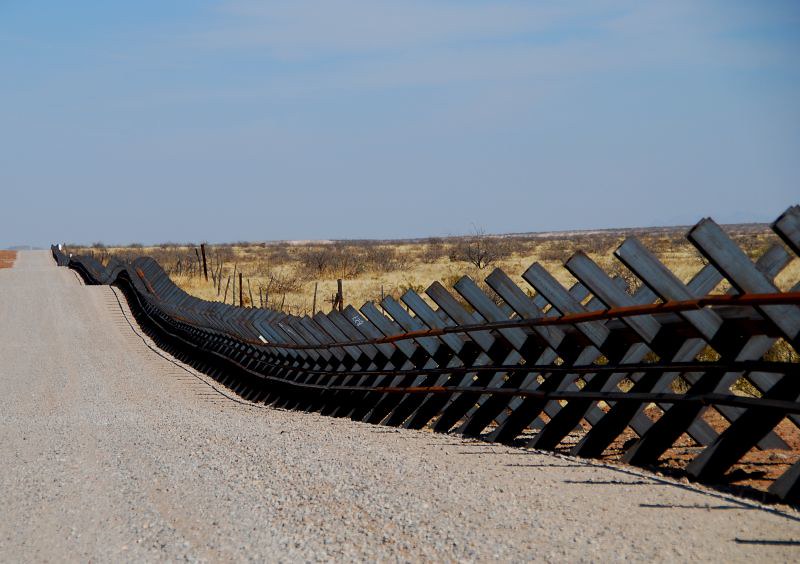
In a developing situation at the Texas border, there’s a brewing tension between state and federal forces, particularly in Eagle Pass. Texas Attorney General Ken Paxton has voiced strong concerns over this escalating situation, making a bold statement that suggests a collusion between President Biden’s administration and criminal cartels controlling parts of the border.
In an interview with Fox News, Paxton expressed uncertainty about President Biden’s forthcoming actions following a Supreme Court decision. This decision indicates that the federal government could remove razor wire in Shelby Park, a state-controlled area, without explicitly stopping Governor Greg Abbott from reinstating it.
Paxton criticized Biden’s border policies, suggesting that they are disadvantageous for the country and accusing the administration of being in partnership with cartels. He contrasted the current situation with previous administrations, where illegal immigrants and cartel smugglers would typically avoid Border Patrol to escape deportation. Under Biden, however, Paxton claims that these groups are deliberately seeking out Border Patrol, as they are then integrated into a system that disperses them throughout the United States.
Highlighting the security concerns, Paxton echoed fears shared by former FBI intelligence and counter-terrorism officials, as previously noted by Sean Hannity on his show. These concerns center around the potential terrorism threats arising from the entry of millions of unidentified foreign nationals under the Biden administration.
Paxton also expressed gratitude towards South Dakota Governor Kristi Noem and other Republican governors for their support of Texas’s handling of the situation. This collective backing from GOP governors extends from Alaska to New Hampshire, showing a united front in response to the Biden administration’s policies in Eagle Pass.
The situation recalls historical instances where federal government actions have overridden state control. Notably, President Eisenhower federalized the Arkansas National Guard in 1957 to ensure the integration of Little Rock Central High School, and President Washington’s administration did the same with the Pennsylvania militia during the Whiskey Rebellion in 1794.
This stand-off at the Texas border has become a focal point of contention, reflecting broader national debates on immigration, border security, and federal versus state authority. As events continue to unfold, the implications of this situation for both state sovereignty and national immigration policy are being closely watched.