
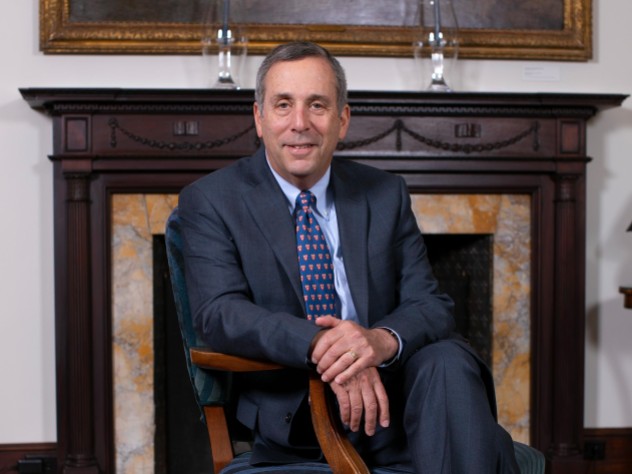
Claudine Gay, a professor of government, will become Harvard’s second woman and the first African American president.
In the coming year, incumbent Harvard president Lawrence Bacow would prefer to step aside in favor of a younger leader. Following the release, Gay will become the institution’s next president on July 1. With a history dating back more than 400 years, the university certainly has much to offer.
Claudine is described as “a remarkable leader who is profoundly dedicated to sustaining and enhancing Harvard’s academic excellence,” “championing the value and values of higher education and research,” “expanding opportunity,” and “strengthening Harvard as a fount of ideas” and “a force for good” in the world by Penny Pritzker, a senior fellow at the Harvard Corporation and chair of the presidential search committee. “special mix of incisiveness and inclusivity, intellectual diversity and strategic genius, institutional ambition and personal humility, a love for timeless ideas, and a knack for initiating change” describes Claudine’s strengths in the workplace.
Gay, a student at Harvard and the daughter of Haitian immigrants, has participated in several projects. Many of the recommendations made by the Presidential Committee on Harvard and the Legacy of Slavery have been implemented, including creating the Salata Institute for Climate and Sustainability and a reparative endowment for the benefit of black and indigenous peoples. She is also the driving force behind the university’s Inequality in America Initiative, which has researched the rise of social justice and how “undocumented” immigrants are treated.
She claims to be a “famous professor of political behavior,” looking at issues of racism in American politics. Before joining the faculty at Harvard, she worked as an assistant professor at Stanford.
In answer to a query on the status of the world, Gay replied, “So many fundamental assumptions about how the world works and how we should interact are being questioned.” Even Harvard students, renowned for their ability to adapt to novel situations and turn their excitement into novel ideas, feel the day’s buzz.
One of the most pivotal periods in the institution’s history occurred while Bacow was in charge, and its role in upholding slavery was investigated. At least seventy enslaved people were held by Harvard graduates between 1636 (Harvard’s foundation year) and 1783 (the year slavery in Massachusetts was abolished), according to the study. Harvard has contributed $100 million to show its remorse.
In the past two years, Harvard’s efforts to lessen the weight of standardized tests in its admissions process have garnered widespread notice. The next first-year class will not need to submit SAT or ACT scores to four-year colleges and universities.
It appears that the Supreme Court has ruled that the Ivy League institution discriminated against Asian candidates while Gay was running for president. The Asian American Coalition for Education found that to have the exact admissions probabilities as white students, Asian candidates needed an SAT to score 140 points higher than white applicants, 270 points higher than Hispanic applicants, and 450 points higher than black applicants.