
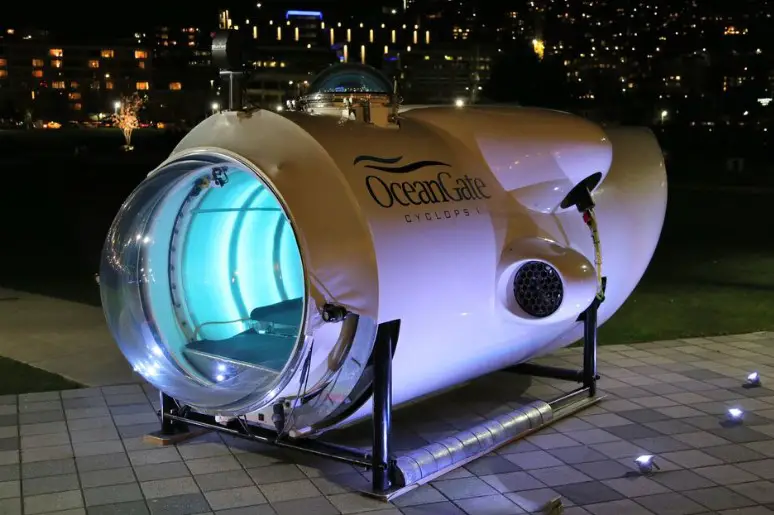
After the Titan submarine lost touch with its host ship earlier this week, the United States Navy was able to pinpoint the exact minute that the submersible imploded, which is a horrible event that occurred.
The Wall Street Journal reports that as soon as the Navy became aware that the Titan had stopped transmitting, they promptly began efforts to locate it. After that, they detected an implosion near the location where debris from the submersible was later found on the ocean floor. This location is approximately 1,600 feet away from the bow of the Titanic.
In a statement that was sent to The Wall Street Journal by a senior officer of the United States Navy, the person said the following: “The United States Navy analyzed acoustic data and identified an anomaly consistent with either an implosion or explosion in the general vicinity where the Titan submersible was operating when communications were lost.” This information was instantly communicated with the Incident Commander in order to assist with the ongoing search and rescue operation; nevertheless, it did not provide any conclusive answers.
On Thursday afternoon, OceanGate, the corporation whose responsibility it was to operate the Titan, made the tragic announcement that all five people who had been aboard the vessel had been lost at sea. The statement from OceanGate expressed their sincere condolences and informed the public of the passing of CEO Stockton Rush, as well as Shahzada Dawood, his son Suleman Dawood, Hamish Harding, and Paul-Henri Nargeolet.
When asked about the newly found debris, Rear Admiral John Mauger remarked that it pointed to a catastrophic loss of the pressure chamber. In response to a query about the recovery of the bodies, Mauger mentioned the difficulties that come with locating them and explained that the implosion happened close to the bottom, where it was subjected to enormous pressure from the water.
Mauger also claimed that the implosion of the submersible might have taken place around the time communication was cut. This was due to the fact that no catastrophic implosions had been recorded in the waters for the preceding 72 or more hours, despite the deployment of sonar buoys to identify the craft.
David Mearns, a renowned marine scientist and rescue specialist, provided the explanation that everybody on board would have perished in an instant if they had been subjected to the high pressures that exist at such depths. Mearns continued by saying, “The only solace is that their deaths would have been immediate, happening in a matter of milliseconds, and the men would not have been aware of what was occurring.”