
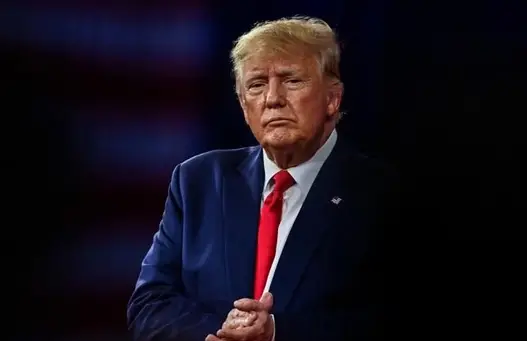
Donald Trump, the former president, has appealed the ruling that kept him off of Maine’s Republican primary ballot. This action is in reaction to a decision made by Democratic Secretary of State Shenna Bellows of Maine, who ruled that Trump is not permitted to run for president under Section 3 of the 14th Amendment. Anyone who has “engaged in insurrection” is not allowed to occupy public office, according to the amendment.
The appeal contests Bellows’ novel application of the Fourteenth Amendment in this particular situation, and it is currently pending before Maine’s Supreme Court. Trump’s legal team had earlier asked Bellows to disqualify herself from the ruling, citing her tweets describing the January 6, 2021 attack on the U.S. Capitol as a “insurrection” and expressing disappointment that the U.S. Senate had not found Trump guilty following the House’s impeachment.
The Republican Party of Maine has stated that it is determined to overrule Bellows’ ruling and guarantee that Trump will be on the ballot. The party stressed its resolve to challenge Bellows’ ruling on all fronts and get ready for the Supreme Court hearing in a social media message.
The public hearing that Bellows held in December—mandated by Maine law—is the source of the conflict. Both sides were given the opportunity to make more points during the hearing, particularly in light of the Colorado Supreme Court’s ruling on December 19 that disqualified Trump from the election based on the same constitutional clause.
Bellows has put her decision on hold until the state Superior Court of Maine makes a verdict. Parallel struggles are taking place in other states, where people are pressuring electoral authorities to strike Trump from the primary ballots in accordance with the same 14th Amendment provision.
In the end, it is anticipated that the U.S. Supreme Court will rule on Trump’s eligibility to compete for federal office. In this instance, Section 3 of the 14th Amendment is being applied for the first time in history to prevent a presidential candidate from running for office, establishing a precedent for how the amendment would be interpreted going forward with regard to election eligibility.