
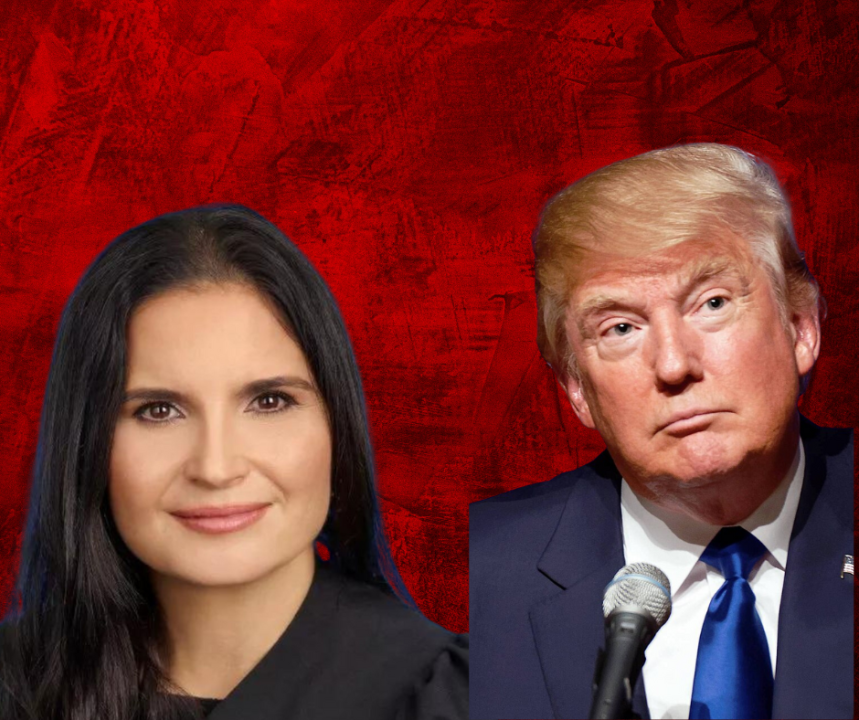
U.S. District Court Judge Aileen Cannon recently made a pivotal ruling in the case involving former President Donald Trump and the retention of classified documents. Judge Cannon dismissed Trump’s motion that sought to drop the charges based on claims of “unconstitutional vagueness.” However, she has yet to decide on another significant motion that argues the Presidential Records Act (PRA) provides a president the authority to retain documents as deemed appropriate.
During the proceedings, Trump’s defense, led by attorney Todd Blanche, argued that the PRA, enacted in the late ’70s, allows a president the discretion to determine which documents are personal versus presidential. They further contended that this discretion extends to taking materials out of the White House, pointing to historical precedents set by past presidents.
The defense also highlighted that then-President Trump had moved the contested boxes while still in office, marking the first instance where the National Archives and Records Administration (NARA) has challenged a president’s determination regarding the classification of documents as personal or presidential. The argument suggests that NARA’s action against Trump was politically motivated.
Despite these arguments, Judge Cannon expressed skepticism about the motion leading to a dismissal of the indictment. She indicated that while the defense’s points might hold weight during a trial, they don’t necessarily justify dismissing the case outright. Cannon noted that interpreting the PRA in the way Trump’s team suggests could “gut” the act by allowing presidents unchecked power to classify clearly presidential records as personal.
The debate extends to the unique nature of the case, with Trump’s team emphasizing that no prior instance exists where a president’s decision on document classification has led to criminal prosecution. They contrasted this with previous administrations, notably President Bill Clinton’s, where NARA did not pursue criminal referrals over potentially lost or mishandled tapes.
Prosecutor David Harbach responded by asserting that the documents in question from Mar-a-Lago were clearly not personal, emphasizing that Trump’s stance on the PRA could undermine the act’s purpose. Harbach also stressed the independence of Special Counsel Jack Smith’s team from the Biden Administration, countering implications of political bias.
This legal battle showcases the complexities of navigating presidential records’ legal landscape and the Presidential Records Act’s interpretation. As the case progresses, these discussions highlight the broader implications for presidential authority over classified and presidential records.