
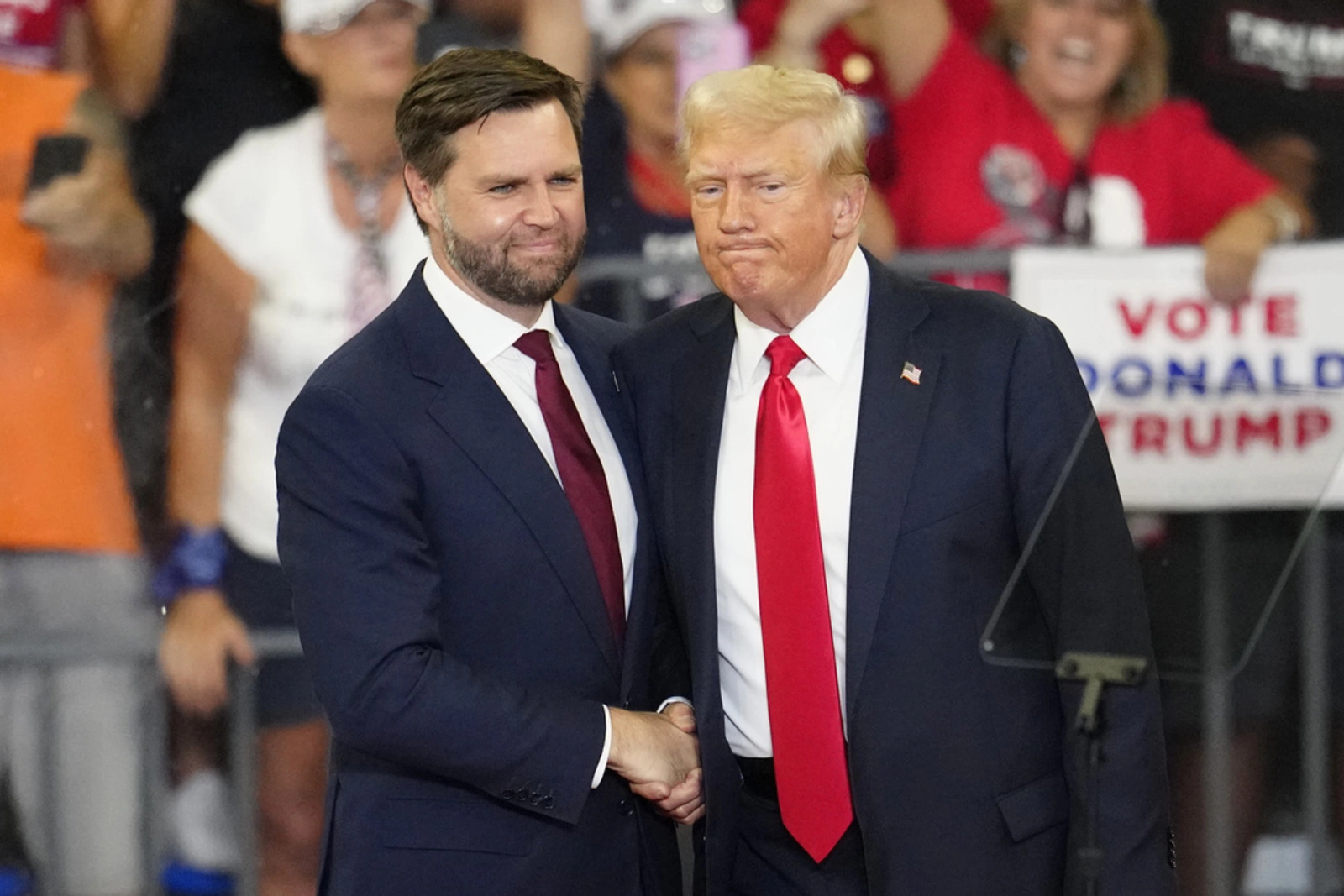
In a recent interview, President Donald Trump addressed the topic of his potential successor for the 2028 presidential election. When asked if he views Vice President JD Vance as his heir apparent, Trump responded that while Vance is “very capable,” it is premature to make such determinations. He emphasized the presence of numerous qualified individuals within the Republican Party and noted that Vance is performing admirably in his current role.
This discussion arises as Vice President Vance embarks on his inaugural international trip, attending significant conferences in France and Germany. His selection as Trump’s running mate was influenced by his alignment with the administration’s populist policies and his appeal to middle-American voters.
Historically, sitting presidents have not always endorsed their vice presidents as successors. For instance, former President Barack Obama did not initially support then-Vice President Joe Biden’s 2016 presidential aspirations, favoring Secretary of State Hillary Clinton instead. Biden eventually secured the presidency in 2020.
Vice President Vance, prior to his current role, served as a U.S. senator from Ohio and is recognized for his memoir “Hillbilly Elegy.” His political trajectory and close association with President Trump have led to speculation about his potential candidacy in 2028. However, both Trump and Vance have indicated that it is too early to discuss future elections, focusing instead on their present responsibilities.
The conversation about succession underscores the dynamic nature of political leadership and the importance of evaluating potential candidates based on their performance and alignment with party values.