
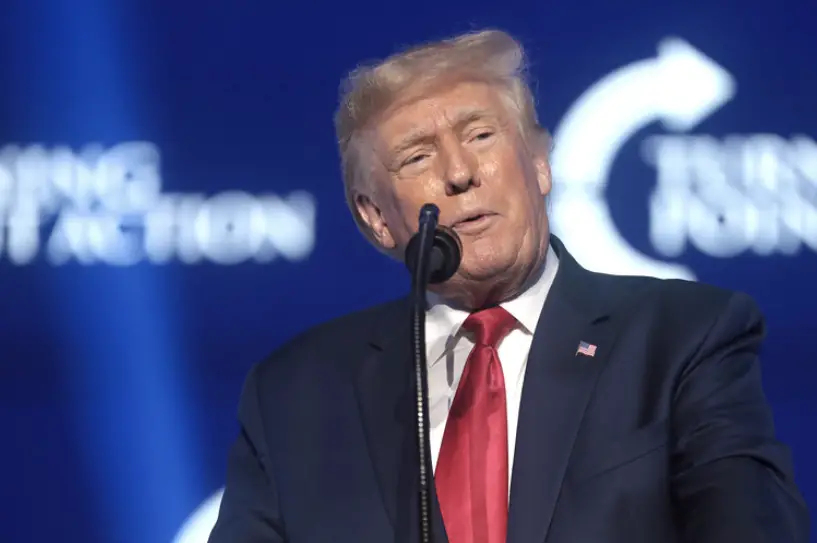
President Donald Trump announced that his administration is preparing to designate Antifa as a “major terrorist organization,” escalating his long-standing criticism of the loosely organized movement. The declaration came during his state visit to the United Kingdom, where he used a social media post to denounce the group as a “sick, dangerous, radical left disaster.” He also said he would recommend federal authorities investigate the movement’s financial supporters.
Antifa, short for “anti-fascist,” does not operate as a single organization. Instead, it is a network of activist groups and individuals who typically organize at the local level. Members have been involved in demonstrations across the country, with some protests in recent years turning violent. Trump’s administration has repeatedly clashed with the movement, accusing its members of instigating unrest and targeting conservatives.
The president’s push faces significant legal obstacles. Under U.S. law, the government has no established process for labeling domestic groups as terrorist organizations, a power traditionally applied only to foreign entities. Constitutional protections on free speech and free association would likely make such a move difficult to enforce, and critics argue it risks criminalizing political dissent.
Supporters of the proposal argue that Antifa’s methods, which sometimes include property damage and confrontations with law enforcement, justify stronger measures. They contend that failing to act leaves communities vulnerable to extremist violence.
Opponents, however, warn that branding Antifa as a terrorist organization could set a dangerous precedent, opening the door for the government to target other activist movements. Civil liberties groups insist that existing laws already give law enforcement the tools to prosecute criminal behavior without the need for new designations.
The announcement adds fuel to an already heated national debate over political extremism, free expression, and the boundaries of federal power. Whether the plan advances through legal channels remains uncertain, but Trump’s statement signals his administration’s intent to take a hard line against a group he views as a serious threat.