
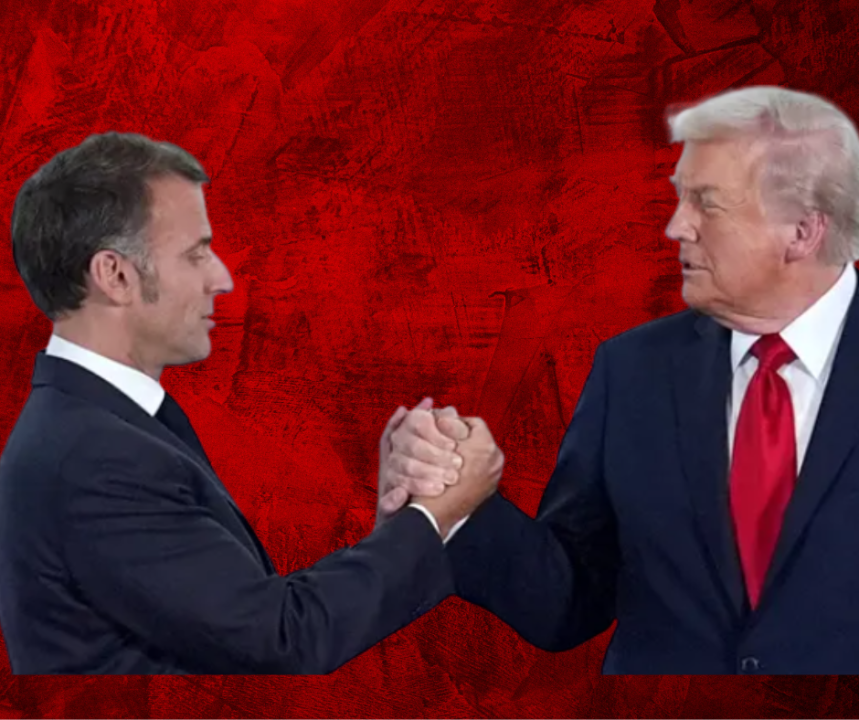
In a mounting global rivalry, U.S. President Donald Trump’s “America First” doctrine is increasingly coming into conflict with French President Emmanuel Macron’s push for a “Europe First” strategy — a clash that is reshaping the dynamics of Western influence.
Trump has made clear that American interests will take precedence in security, trade and diplomacy, signalling a shift toward unilateral decisions and tougher demands on allies. Meanwhile, Macron has stepped up calls for European strategic autonomy, insisting that Europe must bolster its own defence, reduce dependency on U.S. leadership and act independently on the global stage.
France’s president has argued that Europe can no longer rely solely on the U.S. military umbrella and must invest in its own defence industry, technological capacity and risk-sharing agreements. In contrast, Trump has pressed NATO allies and other partners to shoulder a greater share of defence burdens while re-evaluating the cost-benefit calculus of America’s global role.
The tension is not simply rhetorical. It reflects deepening divergences in foreign-policy orientation between Washington and Paris: the U.S. seeking to assert dominance via direct bilateral engagement and transactional alliances, and Europe seeking multilateral frameworks that anchor its own identity and security architecture.
As both leaders manoeuvre for influence, the broader transatlantic alliance finds itself caught between competing visions of leadership — one anchored in American pre-eminence, the other in European independence. The outcome of this contest may reshape the contours of Western power for years to come.