
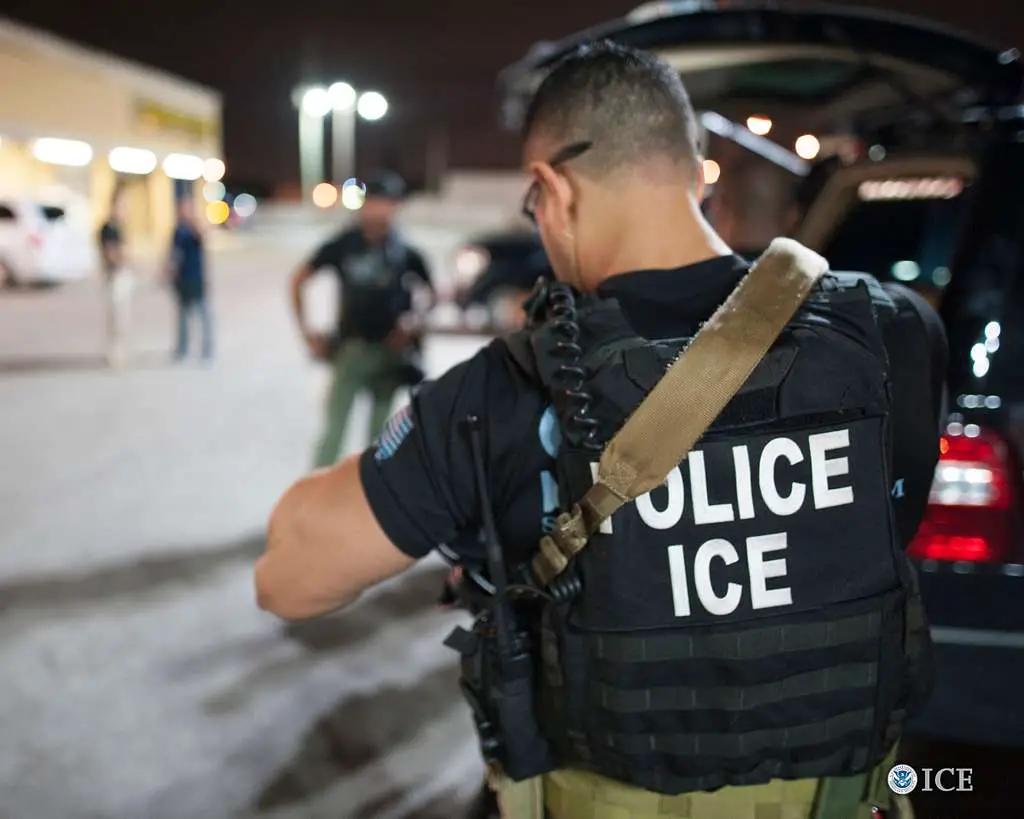
In a significant move by the Trump administration, Immigration and Customs Enforcement (ICE) agents arrested nearly 1,000 undocumented individuals during a nationwide operation within the administration’s first week back in office. The enforcement effort, which spanned multiple states, targeted individuals with prior deportation orders and those with criminal records.
According to ICE officials, the operation focused on apprehending individuals deemed to pose public safety risks, including those with convictions for violent crimes, drug offenses, and gang activity. The agency emphasized that the arrests were part of a broader initiative to enforce immigration laws and prioritize the removal of individuals who have violated federal statutes.
The large-scale operation has drawn praise from supporters who argue that stricter immigration enforcement is essential for national security and public safety. They view the arrests as a necessary step to uphold the rule of law and address long-standing concerns about illegal immigration.
However, the actions have also sparked criticism from immigrant advocacy groups and civil rights organizations. Opponents have expressed concerns about the impact on families and communities, with some calling for more humane approaches to immigration enforcement. They argue that such operations create fear among immigrant populations and may lead to the detention of individuals with no criminal history.
The administration has reiterated its commitment to prioritizing immigration enforcement as a key element of its broader policy agenda. As the operation continues, the debate over balancing enforcement with compassion remains a contentious issue, with both sides voicing strong opinions on the future of immigration policy in the United States.