
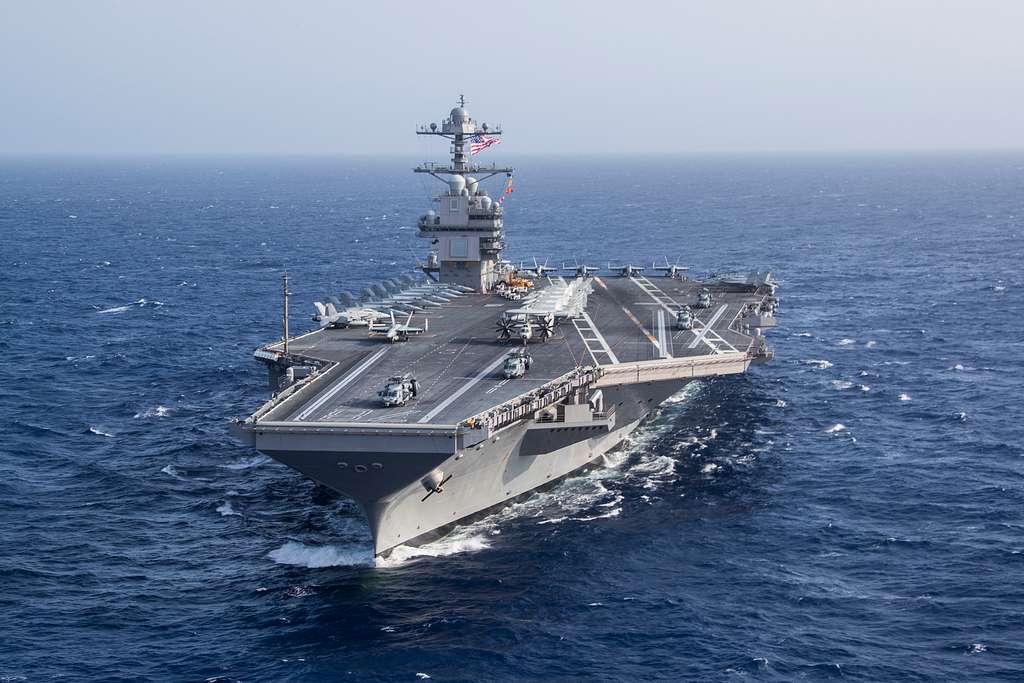
The USS Gerald R. Ford, the U.S. Navy’s most advanced and largest aircraft carrier, is moving toward the Mediterranean and broader Middle East region as tensions with Iran intensify. The deployment strengthens the American military presence at a time of heightened diplomatic and security concerns.
President Donald Trump ordered the repositioning of the Ford to operate alongside the USS Abraham Lincoln and additional U.S. naval assets already in the region. The move results in a rare dual-carrier presence, significantly expanding the United States’ air and naval strike capabilities.
The Ford’s carrier strike group includes guided-missile destroyers and support vessels, bringing advanced fighter aircraft, surveillance systems, and missile defense capabilities. As a nuclear-powered supercarrier, the Ford functions as a mobile airbase capable of launching sustained air operations without relying on land-based facilities.
In addition to the naval buildup, dozens of U.S. fighter jets, including stealth aircraft, have been repositioned to bases across the Middle East to reinforce readiness. The expanded posture enhances the administration’s ability to respond quickly to potential threats while diplomatic efforts involving Iran continue.
The deployment underscores Washington’s strategy of combining negotiations with a visible show of force. Military officials emphasize that aircraft carriers provide flexible deterrence, enabling rapid response across a wide operational range.
As regional tensions remain elevated, the strengthened U.S. presence places substantial air and maritime power within reach of key strategic areas, signaling preparedness while diplomatic channels remain active.