
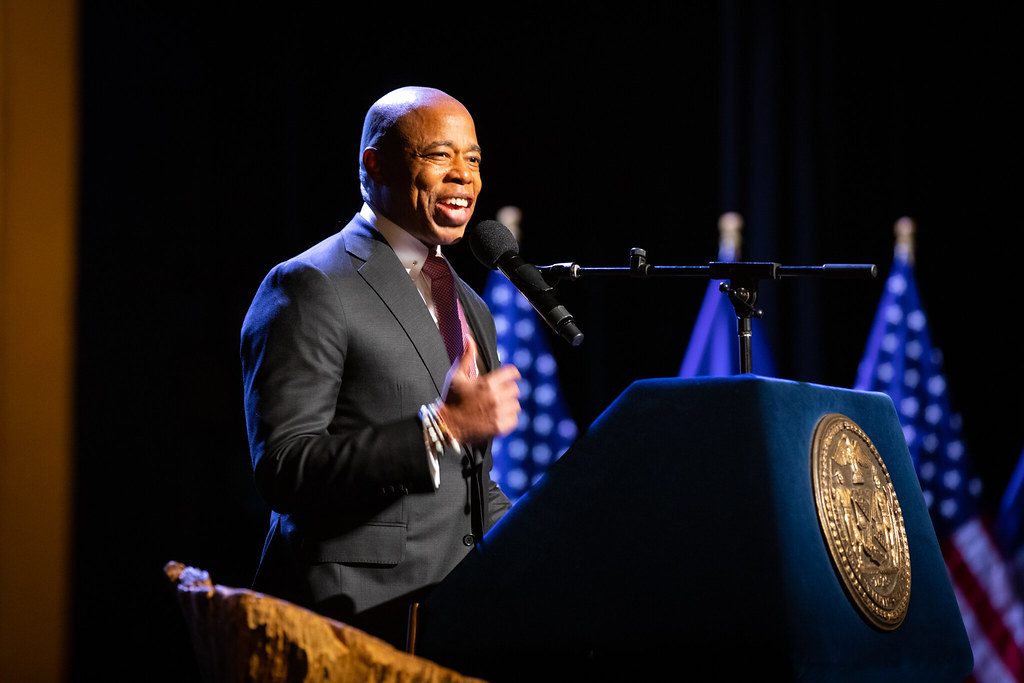
New York City Mayor Eric Adams is facing increasing criticism over his handling of the city’s migrant crisis, with some officials and human rights advocates describing the situation as chaotic and questioning his leadership. This sentiment was highlighted in a recent New York Times article, which delved into the city’s struggle to manage the influx of over 70,000 migrants.
Adams, who has been vocal about the crisis exacerbating the city’s budget shortfall, has stated that New York City has already expended more than $1 billion on the crisis and anticipates needing over $4 billion in additional funding. Despite these challenges, the mayor’s approach to the crisis has sparked discontent among local officials and human rights advocates.
One notable incident involved the Republican executive of Orange County, Steven Neuhaus, who expressed frustration over Adams sending two buses of migrants to his county without prior communication, contrary to what had been promised. This action led to tensions, as Neuhaus and other upstate New York officials complained about the lack of adequate warning before the arrival of migrant buses.
The situation has also led to internal opposition within New York City’s government. City Comptroller Brad Lander has taken steps to limit Adams’s emergency power to contract for migrant services without review, citing “extensive failures” by the city. Scenes of confusion and overcrowding in shelters, along with protests against Adams’s policy of a 60-day limit for shelter stays, have further compounded the crisis.
Volunteer groups and migrant advocates have described the unfolding events as “fabricated chaos,” with migrants resorting to sleeping on sidewalks and engaging in physical altercations to secure shelter. The growing discontent reflects a broader concern about the city’s ability to effectively manage the migrant crisis under Adams’s leadership.
As the situation continues to evolve, Mayor Adams’s office has not yet responded to requests for comment on these developments. The migrant crisis in New York City remains a contentious issue, with its resolution critical to the well-being of thousands of migrants and the city’s overall stability.