
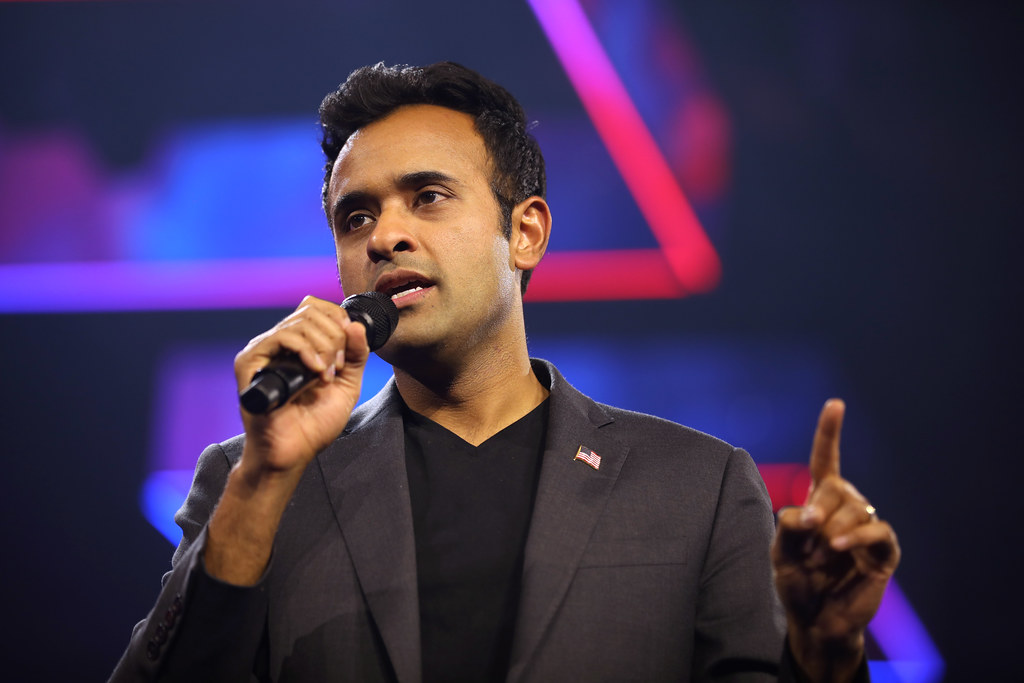
Republican presidential candidate Vivek Ramaswamy recently garnered attention for his response to a Washington Post reporter’s question about condemning “White supremacy and White nationalism.” During a campaign event in Iowa, Ramaswamy was asked if he condemns these ideologies, to which he replied affirmatively but criticized the underlying presumption of the question.
Ramaswamy argued that the real issue of racial discrimination in the U.S. today is not rooted in White supremacy but rather in institutionalized forms such as affirmative action, which he views as a form of racial discrimination based on skin color. He expressed his frustration with the media’s framing of such questions, accusing them of causing the American public to lose trust in mainstream media.
The Washington Post reporter pressed Ramaswamy for a direct condemnation of White supremacy, to which he responded that he would not recite a “catechism” for the reporter’s “new religion of modern wokeism.” He refused to “bend the knee” to the reporter’s line of questioning, reiterating his condemnation of racial discrimination while refusing to engage in what he termed a “silly game of gotcha.”
Ramaswamy predicted that the reporter would publish a headline stating he refused to condemn White supremacy, based on his refusal to answer the question in the expected manner. He accused the media of contributing to national division and failing to report accurately on important issues.
The exchange between Ramaswamy and the reporter quickly went viral on social media, with conservatives praising his handling of the situation. Sports and political commentator Jason Whitlock and author Ann Coulter were among those who commended Ramaswamy’s response, with Coulter suggesting that every GOP candidate should memorize his answer.
The question from the reporter was in response to former Iowa GOP Congressman Steve King’s endorsement of Ramaswamy. King had previously been controversial for his comments regarding White supremacy.
Ramaswamy’s interaction with the reporter and his subsequent response on social media highlight the ongoing debate over media bias and the framing of political discourse, particularly in the context of race and identity politics.