
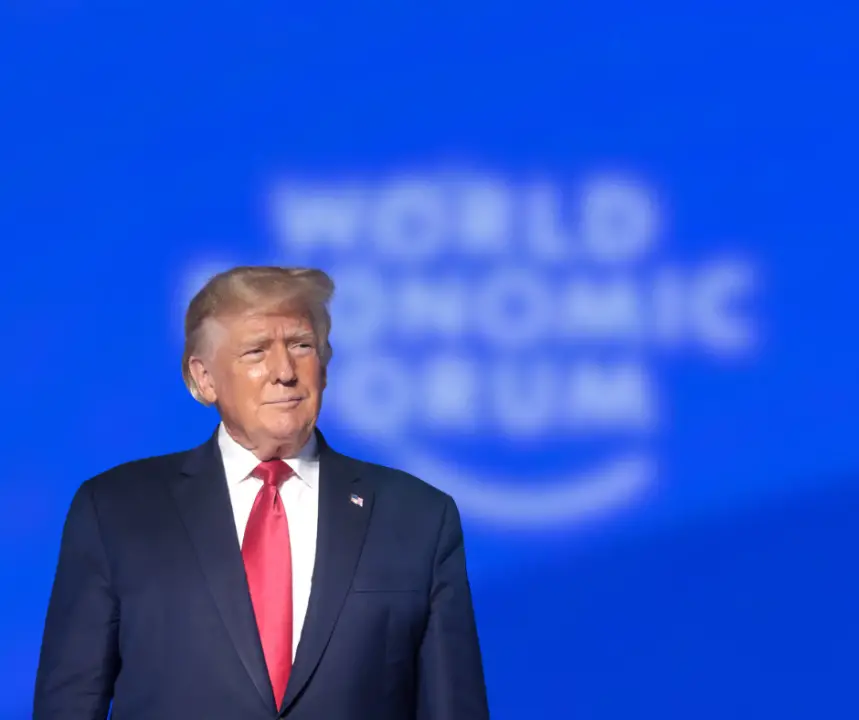
At the prestigious World Economic Forum in Davos, Switzerland, a gathering known for attracting global leaders and influential figures, the absence of former U.S. President Donald Trump did not diminish his presence in conversations. On the heels of his victory in the Iowa caucus, discussions at the forum were abuzz with speculation and concern about the potential implications of Trump’s return to the presidency in the 2024 elections.
The forum, nestled in the scenic Swiss Alps, became a hub for debate and analysis regarding Trump’s influence on international trade, climate policy, and global alliances. Prominent attendees expressed apprehensions that a second Trump term could signal a resurgence of American isolationism, posing challenges to established global economic and environmental strategies.
Trump, known for his “America First” policy, had previously attended the forum as president, leaving a lasting impression on the global elite. His administration’s approach to taxation, international trade, and alliances had notably diverged from traditional U.S. policies, sparking debates about the future direction of international relations.
The potential return of Trump to the White House raised questions about the U.S.’s commitments to NATO and its stance on climate change, two areas where European interests have historically diverged from Trump’s policies. This uncertainty was echoed by Christine Lagarde, president of the European Central Bank, who described Trump’s potential re-election as a ‘threat’ in a recent interview.
Business leaders at the forum also voiced concerns about Trump’s approach to China, particularly in the context of the economic tensions between Washington and Beijing. Trump’s trade policies with China, characterized by a series of import tariffs, had a significant impact on global trade dynamics.
The discussions at Davos reflected a broader global apprehension about the potential changes a second Trump administration could bring. The forum’s attendees, comprising business leaders, government officials, and other influential figures, debated the need for Europe to potentially distance itself from the U.S. and become more self-reliant, especially in technology.
As the world watched, the conversations in Davos highlighted the enduring impact of U.S. politics on global affairs and the cautious anticipation of the international community regarding the outcomes of the upcoming U.S. presidential election.